
AMD
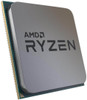
AMD Ryzen 7 5800X3D AM4 Gaming Processor – 8 Cores, 16 Threads, 96MB 3D V-Cache
- SKU:
- 100-100000651PF
- UPC:
- 730143318471
- MPN:
- 100-100000651POF
- Availability:
- Free Click & Collect in Peterborough. UK delivery also available




Description
AMD Ryzen 7 5800X3D AM4 Gaming Processor – 8 Cores, 16 Threads, 96MB L3 3D V-Cache & 4.5GHz Boost
The AMD Ryzen 7 5800X3D is an 8-core, 16-thread Socket AM4 desktop gaming processor built on AMD's Zen 3 architecture and enhanced with AMD 3D V-Cache technology. Designed as a high-performance gaming upgrade for existing DDR4-based AM4 PCs, it combines a 3.4GHz base clock, boost frequencies of up to 4.5GHz and an exceptionally large 96MB L3 cache.
This exact boxed processor, 100-100000651POF, is AMD's current Ryzen 7 5800X3D 10th Anniversary Edition. It celebrates ten years of the AM4 platform and includes a Carbice Ice Pad thermal interface material for installation between the processor and a compatible CPU cooling solution.
The Ryzen 7 5800X3D remains especially attractive to gamers already using a compatible AM4 motherboard and DDR4 memory because it can provide a substantial gaming-focused CPU upgrade without requiring an immediate move to an AM5 motherboard and DDR5 RAM.
Quick answer: The AMD Ryzen 7 5800X3D is an AM4 Zen 3 gaming CPU with 8 cores, 16 threads, 3.4GHz base clock, up to 4.5GHz boost, 96MB L3 cache with AMD 3D V-Cache technology, 105W TDP, DDR4 support and PCIe 4.0 capability. The current 100-100000651POF boxed 10th Anniversary Edition includes a Carbice Ice Pad but does not include a CPU cooler. A discrete graphics card is required because the processor has no integrated graphics.
Key Features of the AMD Ryzen 7 5800X3D
- 8 high-performance Zen 3 CPU cores
- 16 processing threads with simultaneous multithreading
- AMD Ryzen 5000 Series desktop processor
- Former codename: Vermeer
- Socket AM4
- 3.4GHz base clock
- Up to 4.5GHz maximum boost clock
- 96MB L3 cache
- 4MB L2 cache
- 512KB L1 cache
- AMD 3D V-Cache technology
- TSMC 7nm FinFET CPU core technology
- 12nm GlobalFoundries I/O die
- 105W default TDP
- 90°C maximum operating temperature / Tjmax
- AMD Precision Boost 2
- Dual-channel DDR4 memory
- Official memory support up to DDR4-3200 depending on DIMM configuration
- Up to 128GB system memory
- ECC support when supported by the motherboard
- PCI Express 4.0 processor interface
- 24 native PCIe lanes / 20 usable lanes
- NVMe boot support
- NVMe RAID 0 / RAID 1 / RAID 10 support
- No integrated graphics
- Discrete graphics card required
- Compatible with AMD X570, X470, B550, B450 and A520 chipsets according to AMD
- Windows 11 and Windows 10 64-bit support
- AMD Ryzen VR-Ready Premium
- Carbice Ice Pad included with current 10th Anniversary boxed edition
- CPU cooler not included
- AMD recommends liquid cooling for optimal performance
- 3-year AMD limited warranty for qualifying retail boxed processors
AMD 3D V-Cache Technology for Gaming
The defining feature of the Ryzen 7 5800X3D is AMD 3D V-Cache technology.
Instead of relying solely on the conventional cache integrated into the processor die, AMD stacks additional cache vertically to increase the amount of fast memory available close to the CPU cores.
The result is a total L3 cache capacity of:
96MB
Why Large CPU Cache Matters for Gaming
Games frequently need to access large amounts of information including:
- World data
- Object positions
- Physics information
- AI calculations
- Game logic
- Draw-call information
- Frequently accessed instructions and data
If more useful game data can remain in the processor's fast cache, the CPU may need to access slower system memory less frequently.
This is one reason AMD 3D V-Cache processors can perform particularly well in CPU-sensitive gaming workloads.
96MB L3 Cache – Not 96MB of Separate Add-On Memory
The Ryzen 7 5800X3D should accurately be described as having 96MB of total L3 cache with AMD 3D V-Cache technology.
This is more precise than simply calling the complete 96MB “96MB of 3D V-Cache”. The 3D V-Cache technology expands the processor's existing cache architecture to achieve the 96MB total L3 capacity.
The First Ryzen Processor with AMD 3D V-Cache
The Ryzen 7 5800X3D has an important place in AMD's processor history.
AMD identifies it as the first Ryzen desktop processor to feature AMD 3D V-Cache technology.
The technology later became a major feature of AMD's X3D processor families across newer Ryzen generations.
8 Zen 3 CPU Cores
The Ryzen 7 5800X3D uses 8 AMD Zen 3 processor cores.
Zen 3 was designed to provide strong single-threaded performance together with efficient multi-core processing, making the CPU suitable for both gaming and general desktop workloads.
Suitable for Modern Gaming PCs
Eight physical cores provide substantial CPU resources for games while leaving processing capacity available for background applications such as:
- Discord
- Game launchers
- Web browsers
- Monitoring software
- RGB utilities
- Streaming tools
- Voice chat
16 Processing Threads
The processor supports Simultaneous Multithreading / SMT, allowing its eight physical cores to process up to:
16 threads
This can benefit workloads capable of using multiple CPU threads, including:
- Game streaming
- Video encoding
- Photo processing
- Software compilation
- Multitasking
- General content creation
3.4GHz Base Clock
AMD specifies the Ryzen 7 5800X3D with a base clock of:
3.4GHz
The base frequency should not be interpreted as the maximum operating frequency because the processor also uses AMD's dynamic boost technology.
Up to 4.5GHz Maximum Boost Clock
Using AMD Precision Boost 2, the Ryzen 7 5800X3D can increase its operating frequency up to:
4.5GHz
when workload, temperature, power and other operating conditions allow.
Boost Clock Is an “Up To” Figure
4.5GHz is AMD's maximum boost specification rather than a guaranteed all-core operating frequency.
Actual processor clocks vary according to factors including:
- CPU workload
- Number of active cores
- CPU temperature
- Motherboard firmware
- Power delivery
- Cooling performance
- System configuration
105W TDP
The Ryzen 7 5800X3D has a default thermal design power rating of:
105W
This makes an appropriate CPU cooling solution important, particularly during long gaming sessions and sustained multi-core workloads.
No CPU Cooler Included
The AMD Ryzen 7 5800X3D does not include a heatsink or CPU cooler.
AMD's current specification states:
Thermal Solution (PIB): Not Included
You will therefore need a compatible AM4 CPU cooler.
AMD Recommends Liquid Cooling for Optimal Performance
AMD currently recommends a liquid cooler for optimal performance with the Ryzen 7 5800X3D.
A suitable premium AM4 air cooler may also be considered depending on its thermal capacity, chassis airflow and manufacturer compatibility.
Always check the cooler manufacturer's stated AM4 compatibility and thermal capability.
Carbice Ice Pad Included – 10th Anniversary Edition
The current 100-100000651POF boxed Ryzen 7 5800X3D is part of AMD's AM4 10th Anniversary celebration.
AMD includes a:
Carbice Ice Pad
with this edition.
What Is the Carbice Ice Pad?
The Carbice Ice Pad is a thermal interface material designed to sit between the CPU's integrated heat spreader and a compatible CPU cooler.
It uses vertically aligned carbon-nanotube thermal technology and is designed as an alternative thermal interface solution to conventional thermal paste.
The Ice Pad Is Not a CPU Cooler
The Carbice Ice Pad should not be confused with a heatsink, fan or liquid-cooling system.
You still need a compatible AM4 CPU cooler.
The package therefore includes:
- AMD Ryzen 7 5800X3D processor
- Carbice Ice Pad thermal interface material
but does not include a CPU heatsink or cooling fan.
Maximum Operating Temperature – 90°C
AMD specifies a maximum operating temperature / Tjmax of:
90°C
Good cooling and case airflow are therefore important when building a system around the processor.
Socket AM4 Processor
The Ryzen 7 5800X3D uses AMD's established:
Socket AM4
This makes it particularly attractive to existing Ryzen users who already own compatible AM4 hardware.
Potential Upgrade Without Replacing DDR4 Memory
For a compatible system, upgrading to a Ryzen 7 5800X3D can allow you to retain components such as:
- AM4 motherboard
- DDR4 memory
- AM4 CPU cooler where thermally suitable
- Existing PC case
- Existing storage
This can make the processor an attractive gaming upgrade where moving to an entirely new motherboard and DDR5 platform is not required.
Official AMD Chipset Compatibility
AMD's current Ryzen 7 5800X3D specification officially lists the following supporting chipsets:
- X570
- B550
- A520
- X470
- B450
BIOS Support Is Still Essential
Having a physically compatible AM4 socket does not automatically guarantee that a motherboard BIOS supports the Ryzen 7 5800X3D.
Before installation, check the motherboard manufacturer's CPU support list for:
- Ryzen 7 5800X3D support
- Required BIOS version
- Required AMD AGESA revision
If a BIOS update is required, it may need to be completed before the old processor is removed.
What About X370, B350 and A320 Motherboards?
AMD's broader AM4 chipset compatibility information indicates that selected older 300-series motherboards may support Ryzen 5000 processors through manufacturer-specific BIOS updates.
However, AMD's exact Ryzen 7 5800X3D product specification currently lists X570, X470, B550, B450 and A520 as its supporting chipsets.
For an X370, B350 or A320 motherboard, always check the exact motherboard manufacturer's CPU support list before buying.
DDR4 Memory Support
The Ryzen 7 5800X3D uses:
DDR4 system memory
rather than DDR5.
This is one of its biggest advantages for users upgrading an existing AM4 gaming system.
Up to DDR4-3200 Official Memory Speed
AMD officially specifies up to:
DDR4-3200
with supported two-DIMM configurations.
Official supported memory speed can be lower with certain four-DIMM or dual-rank configurations.
Dual-Channel Memory Controller
The integrated memory controller provides:
2 memory channels
A matched pair of compatible DDR4 memory modules can therefore be installed in dual-channel mode on supported motherboards.
Up to 128GB RAM
AMD currently lists a maximum processor memory capacity of:
128GB
Actual system capacity also depends on motherboard memory-slot configuration, BIOS support and supported DIMMs.
ECC Memory Support
AMD lists:
ECC Support: Yes – requires motherboard support.
This means ECC capability is not guaranteed simply by installing the Ryzen 7 5800X3D.
The motherboard, BIOS and memory modules must also provide compatible ECC functionality.
PCI Express 4.0
The Ryzen 7 5800X3D supports:
PCI Express 4.0
providing high-bandwidth connectivity for compatible graphics cards and NVMe SSDs when paired with an appropriate motherboard.
24 Native PCIe Lanes
AMD lists:
- 24 native PCIe lanes total
- 20 native usable PCIe lanes
Motherboard Determines Actual PCIe Capability
Installing a PCIe 4.0-capable processor does not guarantee that every AM4 motherboard connection will operate at PCIe 4.0 speeds.
Actual PCIe generation and lane configuration depend on:
- Motherboard chipset
- Motherboard PCB design
- BIOS support
- Expansion-slot configuration
- Installed hardware
For example, older B450 and X470 motherboards generally provide different PCIe capabilities from B550 and X570 platforms.
NVMe Storage Support
AMD lists native NVMe functionality including:
- NVMe boot support
- RAID 0
- RAID 1
- RAID 10
Available storage connectors and RAID implementation ultimately depend on the selected motherboard.
No Integrated Graphics
The Ryzen 7 5800X3D does not contain an integrated Radeon graphics processor.
AMD's official specification states:
Graphics Model: Discrete Graphics Card Required
A Dedicated Graphics Card Is Required
For a conventional desktop gaming system, you will need a compatible discrete GPU such as:
- AMD Radeon graphics card
- NVIDIA GeForce graphics card
- Other compatible PCI Express discrete graphics solution
Motherboard HDMI / DisplayPort Will Not Create Graphics
Many AM4 motherboards include HDMI or DisplayPort connectors, but these outputs rely on a processor with integrated graphics.
Because the Ryzen 7 5800X3D has no integrated GPU, motherboard display outputs cannot provide normal graphics output from this processor alone.
Connect your monitor to the installed discrete graphics card instead.
Zen 3 Architecture
The Ryzen 7 5800X3D is based on AMD's:
Zen 3 core architecture
and carries the former development codename:
Vermeer
7nm CPU Core Technology
AMD specifies the processor's CPU cores as manufactured using:
TSMC 7nm FinFET
12nm I/O Die
The processor's separate I/O die uses:
GlobalFoundries 12nm technology
This chiplet-based design separates the CPU compute die from the I/O functions.
Cache Configuration
AMD specifies:
- L1 cache: 512KB
- L2 cache: 4MB
- L3 cache: 96MB
The unusually large L3 cache is the key characteristic separating the 5800X3D from the conventional Ryzen 7 5800X.
Ryzen 7 5800X3D vs Ryzen 7 5800X
Although the names are similar, the Ryzen 7 5800X3D and Ryzen 7 5800X are different processors.
Ryzen 7 5800X3D
- 8 cores
- 16 threads
- 3.4GHz base
- Up to 4.5GHz boost
- 96MB L3 cache
- AMD 3D V-Cache
- 105W TDP
Ryzen 7 5800X
- 8 cores
- 16 threads
- 3.8GHz base
- Up to 4.7GHz boost
- 32MB L3 cache
- No 3D V-Cache
- 105W TDP
The 5800X3D therefore trades some clock frequency for a dramatically larger cache architecture designed particularly around gaming workloads.
10th Anniversary Edition – 2026 AM4 Relaunch
AMD originally launched the Ryzen 7 5800X3D in April 2022.
In 2026, AMD marked 10 years of Socket AM4 by bringing back the Ryzen 7 5800X3D as a special 10th Anniversary Edition.
The current boxed 100-100000651POF version includes the Carbice Ice Pad thermal interface material.
Why AMD Relaunched the 5800X3D
The anniversary edition gives existing AM4 users another opportunity to upgrade CPU gaming performance while continuing to use a compatible DDR4 platform rather than rebuilding around a new socket and memory standard.
Ideal Upgrade for an Existing AM4 Gaming PC
The Ryzen 7 5800X3D is particularly attractive to users currently running older AM4 processors such as selected:
- Ryzen 1000 Series
- Ryzen 2000 Series
- Ryzen 3000 Series
- Ryzen 4000 Series
- Earlier Ryzen 5000 models
provided the specific motherboard supports the 5800X3D through the required BIOS.
Potentially Keep Your Existing DDR4 RAM
Because the Ryzen 7 5800X3D remains a DDR4 processor, compatible existing memory can potentially be reused.
Potentially Keep Your Existing AM4 Cooler
An existing AM4 cooler can potentially be reused if:
- It physically supports Socket AM4
- It has sufficient thermal capacity
- Its mounting hardware is complete
- It remains in good condition
AMD nevertheless recommends liquid cooling for optimal 5800X3D performance.
Ideal for High-Refresh-Rate Gaming
A powerful gaming CPU becomes particularly important when a system is attempting to produce high frame rates, especially at resolutions and settings where the graphics card is not the sole performance bottleneck.
The Ryzen 7 5800X3D is designed for gaming workloads where:
- CPU performance matters
- High minimum frame rates are desirable
- Large game datasets benefit from cache
- Powerful discrete GPUs are installed
- High-refresh-rate monitors are used
Suitable for Gaming and Everyday Productivity
Although the Ryzen 7 5800X3D is primarily gaming-focused, its 8-core / 16-thread configuration also provides strong general desktop processing capability for:
- Office productivity
- Web development
- Programming
- Photo editing
- Light-to-moderate video editing
- Streaming
- Compression
- Multitasking
Supported Operating Systems
AMD currently lists support for operating systems including:
- Windows 11 64-bit
- Windows 10 64-bit
- Ubuntu x86 64-bit
- Red Hat Enterprise Linux x86 64-bit
Operating-system support can depend on motherboard firmware, drivers and individual software requirements.
AMD Ryzen VR-Ready Premium
AMD lists the Ryzen 7 5800X3D as supporting AMD Ryzen VR-Ready Premium.
A complete VR gaming system also requires appropriate graphics hardware, memory, connectivity and a supported VR headset.
Supported CPU Instruction Technologies
AMD lists processor instruction and acceleration support including:
- x86-64
- AES
- AMD-V
- AVX
- AVX2
- FMA3
- SHA
- SSE
- SSE2
- SSE3
- SSSE3
- SSE4.1
- SSE4.2
- SSE4A
- MMX-plus
AMD-V Virtualisation Support
The Ryzen 7 5800X3D includes AMD-V hardware virtualisation support.
This can be useful for compatible virtualisation software, development environments and virtual machines when enabled in the motherboard firmware.
Precision Boost 2
AMD specifies Precision Boost 2 as the CPU's boost technology.
The processor dynamically adjusts operating frequencies according to real-time conditions such as:
- Workload
- Temperature
- Available electrical power
- Number of active cores
- Motherboard configuration
Important Overclocking Note
The Ryzen 7 5800X3D should not be confused with conventional Ryzen processors whose product specifications explicitly advertise an unlocked multiplier.
AMD's current Ryzen 7 5800X3D product specification does not list “Unlocked for Overclocking” and instead specifies Precision Boost 2 as its CPU boost technology.
For stability, processor operation should follow AMD and motherboard-manufacturer recommendations rather than assuming conventional Ryzen multiplier-overclocking behaviour.
AMD Ryzen 7 5800X3D Technical Overview
- Manufacturer: AMD
- Product: Ryzen 7 5800X3D
- Family: AMD Ryzen
- Series: Ryzen 5000 Series
- Current Edition: 10th Anniversary Edition
- Market Segment: Enthusiast Desktop / Gaming
- Former Codename: Vermeer
- Architecture: Zen 3
- CPU Cores: 8
- Threads: 16
- SMT: Yes
- Base Clock: 3.4GHz
- Maximum Boost Clock: Up to 4.5GHz
- L1 Cache: 512KB
- L2 Cache: 4MB
- L3 Cache: 96MB
- Cache Technology: AMD 3D V-Cache
- CPU Core Process: TSMC 7nm FinFET
- I/O Die Process: GlobalFoundries 12nm
- CPU Socket: AM4
- Default TDP: 105W
- Maximum Operating Temperature: 90°C
- Boost Technology: Precision Boost 2
- Memory Type: DDR4
- Memory Channels: 2
- Maximum Memory: 128GB
- Official Maximum Memory Speed: Up to DDR4-3200 depending on DIMM configuration
- ECC: Supported where motherboard support is provided
- PCI Express: PCIe 4.0
- Native PCIe Lanes: 24 total / 20 usable
- Graphics: None
- Discrete GPU Required: Yes
- Official Supporting Chipsets: X570 / X470 / B550 / B450 / A520
- CPU Cooler Included: No
- AMD Cooling Recommendation: Liquid cooler recommended for optimal performance
- Carbice Ice Pad: Included with 10th Anniversary Edition
- Boxed Product ID / MPN: 100-100000651POF
- Tray Product ID: 100-000000651
- UPC-12: 730143318471
- EAN / GTIN-13: 0730143318471
- AMD Boxed Processor Warranty: 3-Year Limited Warranty, subject to AMD terms
What Is Included?
- 1 × AMD Ryzen 7 5800X3D processor
- 1 × Carbice Ice Pad thermal interface material – current 10th Anniversary POF edition
- Retail AMD processor packaging
What Is Not Included?
- CPU cooler
- Liquid cooler
- Motherboard
- DDR4 memory
- Graphics card
- SSD
- Operating system
Important Cooler Note
A CPU cooler is required but not included.
AMD recommends a liquid cooler for optimal performance.
The included Carbice Ice Pad is a thermal interface material and does not replace the CPU heatsink or liquid-cooling system.
Important Graphics Note
The Ryzen 7 5800X3D has no integrated graphics.
A discrete graphics card is required for normal display output in a gaming PC.
Do not assume that motherboard HDMI or DisplayPort connectors will function simply because they are physically present.
Important AM4 Compatibility Note
Socket AM4 alone does not guarantee processor compatibility.
AMD officially lists X570, X470, B550, B450 and A520 chipsets for the Ryzen 7 5800X3D.
Always check the motherboard manufacturer's CPU compatibility list and required BIOS version before installation.
Important BIOS Update Note
An older AM4 motherboard may require a BIOS update before it can recognise the Ryzen 7 5800X3D.
If your motherboard does not support BIOS Flashback or CPU-less firmware updating, install the required BIOS while the existing compatible CPU is still fitted.
Important 300-Series Motherboard Note
Some X370, B350 and A320 motherboards may support selected Ryzen 5000 processors through manufacturer-specific BIOS releases.
Because AMD's exact 5800X3D product page does not include these chipsets in its primary support list, verify the exact motherboard model before purchasing.
Important Memory Note
The processor officially supports DDR4 memory.
AMD lists DDR4-3200 with supported two-DIMM configurations, while official speeds can reduce with some four-DIMM and dual-rank combinations.
Memory overclocking profiles and speeds above AMD's standard specification depend on the motherboard, RAM kit and individual system stability.
Important PCIe 4.0 Note
The Ryzen 7 5800X3D itself supports PCIe 4.0.
Actual PCIe generation available to the graphics card and NVMe storage depends on the motherboard chipset and board design.
Do not advertise every 5800X3D system as automatically providing PCIe 4.0 on all expansion interfaces.
Important Cache Description Note
The correct manufacturer specification is:
96MB L3 cache with AMD 3D V-Cache technology.
This is more technically accurate than suggesting that all 96MB is a separate add-on cache layer.
Important Boost Clock Note
The processor is rated for a maximum boost of up to 4.5GHz.
This does not guarantee that all eight cores operate continuously at 4.5GHz under sustained workloads.
Important TDP Note
The processor's default TDP is 105W.
CPU cooler selection should account for processor heat output, sustained workloads, case airflow and ambient temperature.
Important 10th Anniversary Edition Note
The exact 100-100000651POF boxed product on this page is AMD's current 10th Anniversary Edition and includes the Carbice Ice Pad.
Older Ryzen 7 5800X3D retail stock can use a different boxed part number and may not include the Carbice thermal interface pad.
Who Is the AMD Ryzen 7 5800X3D Best For?
- Existing AM4 gaming-PC owners
- Users wanting to keep DDR4 memory
- Gamers upgrading from an older Ryzen processor
- High-refresh-rate gaming systems
- Gaming PCs with powerful discrete graphics cards
- B450 / B550 / X470 / X570 users with compatible BIOS support
- Users wanting AMD 3D V-Cache gaming technology without moving to AM5
- Users who want an 8-core / 16-thread CPU
- Gaming and streaming systems
- AM4 systems being upgraded for a longer useful life
Who Should Consider a Different Processor?
A different CPU or platform may be more appropriate if you specifically require:
- Integrated graphics
- DDR5 memory
- Socket AM5
- PCIe 5.0
- A CPU cooler included in the box
- More than 8 CPU cores
- A processor primarily intended for heavy multi-core workstation rendering
- A new-build platform with a longer future CPU-upgrade path
Why Choose the AMD Ryzen 7 5800X3D?
The AMD Ryzen 7 5800X3D remains a particularly compelling processor for gamers who already own a compatible AM4 system.
Its combination of 8 Zen 3 cores, 16 threads and 96MB of L3 cache with AMD 3D V-Cache technology was created specifically to improve performance in workloads such as gaming where fast access to frequently used data can have a significant impact.
The processor boosts up to 4.5GHz while retaining the established AM4 socket and DDR4 memory platform, allowing many users to upgrade CPU performance without replacing their motherboard and RAM at the same time.
PCIe 4.0 support provides modern connectivity for compatible graphics cards and NVMe SSDs, while the dual-channel DDR4 controller supports up to 128GB of memory.
The Ryzen 7 5800X3D also provides 16 processing threads for multitasking, streaming and general productivity alongside its gaming-focused cache architecture.
AMD's current 10th Anniversary Edition gives the processor additional relevance in 2026 by celebrating a decade of AM4 and bundling the new Carbice Ice Pad thermal interface material with the boxed processor.
Choose the AMD Ryzen 7 5800X3D if you want one of the strongest gaming-focused upgrade options for a compatible DDR4-based AM4 PC, with 8 cores, 16 threads, 96MB L3 3D V-Cache, PCIe 4.0 and up to 4.5GHz boost.
Specification
AMD Ryzen 7 5800X3D 10th Anniversary Edition Specifications
The AMD Ryzen 7 5800X3D, boxed product ID 100-100000651POF, is an 8-core, 16-thread Socket AM4 desktop gaming processor based on AMD's Zen 3 architecture. It features 96MB of L3 cache with AMD 3D V-Cache technology, a 3.4GHz base clock, boost frequencies up to 4.5GHz, DDR4 memory support and PCIe 4.0 connectivity.
This exact POF boxed version is AMD's current 10th Anniversary Edition and includes a Carbice Ice Pad thermal interface material. A CPU heatsink or liquid cooler is not included.
General Information
| Manufacturer | AMD |
| Product | AMD Ryzen 7 5800X3D |
| Product Family | AMD Ryzen |
| Series | AMD Ryzen 5000 Series |
| Edition | 10th Anniversary Edition |
| Market Segment | Enthusiast Desktop / Gaming |
| Form Factor | Desktop Boxed Processor |
| Former Codename | Vermeer |
| Processor Architecture | Zen 3 |
| CPU Socket | AM4 |
Product Identification
| Boxed Product ID / MPN | 100-100000651POF |
| Tray Product ID | 100-000000651 |
| Current Memox SKU | 100-100000651PF |
| UPC-12 | 730143318471 |
| EAN / GTIN-13 | 0730143318471 |
CPU Core Configuration
| CPU Cores | 8 |
| Threads | 16 |
| Simultaneous Multithreading / SMT | Yes |
| Architecture | Zen 3 |
| Instruction Set | x86-64 |
Clock Speeds
| Base Clock | 3.4GHz |
| Maximum Boost Clock | Up to 4.5GHz |
| Boost Technology | AMD Precision Boost 2 |
Cache
| L1 Cache | 512KB |
| L2 Cache | 4MB |
| L3 Cache | 96MB |
| Total L2 + L3 Cache | 100MB |
| Cache Technology | AMD 3D V-Cache Technology |
AMD 3D V-Cache
| AMD 3D V-Cache | Yes |
| Total L3 Cache | 96MB |
| Primary Application | Gaming and cache-sensitive workloads |
| Historical Significance | First Ryzen desktop processor generation to introduce AMD 3D V-Cache technology |
Processor Manufacturing Technology
| CPU Core Process | TSMC 7nm FinFET |
| I/O Die Process | GlobalFoundries 12nm |
| CPU Compute Die / CCD Size | 74mm² |
| I/O Die / IOD Size | 125mm² |
| Package Die Count | 2 |
Power and Thermal Specifications
| Default TDP | 105W |
| Maximum Operating Temperature / Tjmax | 90°C |
| CPU Cooler Included | No |
| AMD Recommended Cooler | Liquid cooler recommended for optimal performance |
| Thermal Interface Material Included | Yes – Carbice Ice Pad on current 10th Anniversary Edition |
Carbice Ice Pad
| Carbice Ice Pad Included | Yes – with 100-100000651POF 10th Anniversary Edition |
| Product Type | Thermal Interface Material |
| Installed Between | CPU heat spreader and compatible CPU cooler |
| Replaces CPU Cooler | No |
| Separate Heatsink / AIO Required | Yes |
Memory Support
| System Memory Type | DDR4 |
| Memory Subtype | UDIMM |
| Memory Channels | 2 / Dual Channel |
| Maximum Memory Capacity | 128GB |
| DDR5 Support | No |
| ECC Support | Yes – requires compatible motherboard support |
Official DDR4 Memory Speeds
| 2 × Single-Rank DIMMs / 2x1R | Up to DDR4-3200 |
| 2 × Dual-Rank DIMMs / 2x2R | Up to DDR4-3200 |
| 4 × Single-Rank DIMMs / 4x1R | Up to DDR4-2933 |
| 4 × Dual-Rank DIMMs / 4x2R | Up to DDR4-2667 |
PCI Express Connectivity
| PCI Express Version | PCIe 4.0 |
| Native PCIe Lanes – Total | 24 |
| Native PCIe Lanes – Usable | 20 |
| PCIe 5.0 Support | No |
NVMe Support
| NVMe Boot | Supported |
| NVMe RAID 0 | Supported |
| NVMe RAID 1 | Supported |
| NVMe RAID 10 | Supported |
Native Processor I/O
| Native USB 3.2 Gen 2 10Gbps | 4 |
| Native USB 3.2 Gen 1 5Gbps | 0 |
| Native USB 2.0 | 0 |
| Native SATA Ports | 2 |
Integrated Graphics
| Integrated Graphics | No |
| AMD Graphics Model | Discrete Graphics Card Required |
| Discrete GPU Required for Normal Display Output | Yes |
Socket and Motherboard Compatibility
| CPU Socket | AM4 |
| AMD X570 | Officially Supported |
| AMD X470 | Officially Supported |
| AMD B550 | Officially Supported |
| AMD B450 | Officially Supported |
| AMD A520 | Officially Supported |
Older 300-Series Motherboards
| X370 | May be supported by selected motherboard manufacturers with specific BIOS versions – verify exact board |
| B350 | May be supported by selected motherboard manufacturers with specific BIOS versions – verify exact board |
| A320 | May be supported by selected motherboard manufacturers with specific BIOS versions – verify exact board |
| AMD Exact 5800X3D Product Page Primary List | X570 / X470 / B550 / B450 / A520 |
Processor Technologies
| AMD 3D V-Cache Technology | Yes |
| AMD Precision Boost 2 | Yes |
| AMD-V Virtualisation | Yes |
| AMD Ryzen VR-Ready Premium | Yes |
| Windows 11 Gaming Support | Yes |
Instruction Set Extensions
| Instruction Set | x86-64 |
| AES | Supported |
| AMD-V | Supported |
| AVX | Supported |
| AVX2 | Supported |
| FMA3 | Supported |
| SHA | Supported |
| SSE / SSE2 / SSE3 | Supported |
| SSSE3 | Supported |
| SSE4.1 / SSE4.2 / SSE4A | Supported |
| MMX-plus | Supported |
Operating System Support
| Windows 11 64-Bit | Supported |
| Windows 10 64-Bit | Supported |
| Ubuntu x86 64-Bit | Supported |
| Red Hat Enterprise Linux x86 64-Bit | Supported |
Launch and Edition Information
| Original Ryzen 7 5800X3D Launch Date | 20 April 2022 |
| 10th Anniversary Edition Announced | 31 May 2026 |
| 10th Anniversary Edition Availability | From 25 June 2026 |
| Current Boxed Product ID | 100-100000651POF |
Package Contents
| AMD Ryzen 7 5800X3D Processor | Included |
| Carbice Ice Pad | Included with current 10th Anniversary 100-100000651POF edition |
| AMD Retail Packaging | Included |
| CPU Air Cooler | Not Included |
| Liquid Cooler | Not Included |
Warranty
| AMD Processor-in-a-Box Warranty | 3-Year Limited Warranty |
| Warranty Starts | Date of purchase by the original customer |
| Applicable To | Qualifying genuine sealed retail Processor-in-a-Box products with valid AMD-verified serial number |
| Warranty Terms | Subject to AMD's current warranty terms and exclusions |
Important 10th Anniversary Edition Note
The exact boxed product on this page is 100-100000651POF.
AMD identifies this as the current Ryzen 7 5800X3D boxed product and states that every 10th Anniversary Edition Ryzen 7 5800X3D includes a Carbice Ice Pad.
Older Ryzen 7 5800X3D stock may use a different boxed ordering part number and should not automatically be assumed to contain the Carbice Ice Pad.
Important Carbice Ice Pad Note
The included Carbice Ice Pad is a thermal interface material.
It sits between the processor's integrated heat spreader and the compatible CPU cooler.
It does not replace the heatsink, fan or liquid-cooling system.
Important CPU Cooler Note
AMD specifies:
Thermal Solution (PIB): Not Included.
A compatible Socket AM4 CPU cooler is required.
AMD currently recommends a liquid cooler for optimal performance with the Ryzen 7 5800X3D.
Important 96MB Cache Note
The technically correct specification is:
96MB total L3 cache with AMD 3D V-Cache technology.
The processor also contains 4MB of L2 cache and 512KB of L1 cache.
AMD therefore also describes the processor as having 100MB of combined L2 + L3 cache.
Important Boost Clock Note
The maximum boost frequency is:
Up to 4.5GHz.
This is not a guaranteed all-core clock. Actual operating frequency varies according to workload, active core count, temperature, available power, motherboard firmware and cooling.
Important Graphics Note
The Ryzen 7 5800X3D contains no integrated graphics processor.
AMD specifically lists:
Discrete Graphics Card Required.
A monitor connected to a motherboard HDMI or DisplayPort output will not normally produce a display with this CPU unless an appropriate separate graphics solution is present.
Important AM4 Motherboard Compatibility Note
The processor uses Socket AM4, but Socket AM4 alone does not guarantee compatibility.
AMD's current exact product page officially lists:
- X570
- X470
- B550
- B450
- A520
Check the motherboard manufacturer's CPU support list and required BIOS version before installation.
Important BIOS Update Note
Many older AM4 motherboards require a BIOS update before they can recognise the Ryzen 7 5800X3D.
If an update is required, it is often safest to complete it while the existing compatible CPU remains installed, unless the motherboard supports CPU-less BIOS Flashback.
Important 300-Series Motherboard Note
Some motherboard manufacturers provide BIOS support for the Ryzen 7 5800X3D on selected X370, B350 or A320 boards.
However, AMD's current exact 5800X3D product specification lists X570, X470, B550, B450 and A520 as its primary supporting chipsets.
For a 300-series motherboard, verify the exact motherboard model and CPU-support BIOS before ordering.
Important DDR4 Memory Note
The Ryzen 7 5800X3D uses DDR4 memory only.
It does not support DDR5.
AMD's official maximum memory speeds depend on the number and rank configuration of installed DIMMs:
- 2x1R: DDR4-3200
- 2x2R: DDR4-3200
- 4x1R: DDR4-2933
- 4x2R: DDR4-2667
Memory speeds above AMD's official specification are overclocked settings and depend on the motherboard, DIMMs and system stability.
Important ECC Memory Note
AMD lists ECC support as:
Yes – requires motherboard support.
The CPU alone does not guarantee a functioning ECC system. The motherboard, BIOS and installed memory must all support the required ECC mode.
Important PCIe 4.0 Note
The Ryzen 7 5800X3D supports PCI Express 4.0 and provides 24 native processor lanes, of which AMD lists 20 as usable.
Actual PCIe generation and lane allocation available to the graphics card, NVMe SSDs and other devices depends on the motherboard chipset and board design.
Important Native USB / SATA Note
AMD lists the processor with:
- 4 × native USB 3.2 Gen 2 10Gbps connections
- 2 × native SATA ports
These are processor-level capabilities. The number and type of physical USB and SATA connectors exposed by a finished PC depend on the motherboard manufacturer and chipset.
Important Overclocking Note
AMD's current Ryzen 7 5800X3D specification lists Precision Boost 2 as its CPU boost technology and does not list the conventional “Unlocked for Overclocking” specification shown on processors such as the standard Ryzen 7 5800X.
Do not advertise the 5800X3D as a conventional unlocked-multiplier Ryzen CPU unless AMD specifically documents that capability for this model.
Important TDP and Temperature Note
AMD specifies:
- Default TDP: 105W
- Maximum operating temperature / Tjmax: 90°C
Appropriate CPU cooling and good case airflow are therefore important, particularly during sustained gaming or multi-core workloads.
Important Warranty Note
AMD provides a 3-year limited warranty on qualifying genuine retail Processor-in-a-Box CPUs.
The warranty applies to qualifying products with a valid AMD-verified serial number and is subject to AMD's installation, use and warranty exclusions.
Important Product ID Note
The exact current boxed processor ordering part number is:
100-100000651POF
The corresponding tray processor ID is:
100-000000651
These identifiers should not be confused when determining retail boxed warranty coverage.
Important Barcode Note
The correct barcode formats for the current boxed POF version are:
- UPC-12: 730143318471
- EAN / GTIN-13: 0730143318471
Memox SKU Check
The current Memox page displays its SKU as:
100-100000651PF
while the manufacturer MPN is:
100-100000651POF
If the Memox SKU is intended to mirror AMD's ordering part number, the current SKU appears to be missing the letter O and should be changed to 100-100000651POF.
If 100-100000651PF is deliberately an internal Memox inventory code, it can remain unchanged.
Model Identification Note
These specifications apply specifically to the AMD Ryzen 7 5800X3D 10th Anniversary Edition, Socket AM4 boxed processor, MPN 100-100000651POF, UPC 730143318471 and EAN / GTIN-13 0730143318471.
Return
FAQ: Frequenlty Asked Questions
AMD Ryzen 7 5800X3D AM4 Gaming Processor FAQ
The AMD Ryzen 7 5800X3D (100-100000651POF) is an 8-core, 16-thread Zen 3 gaming processor for Socket AM4 PCs. It combines a 3.4GHz base clock, boost speeds up to 4.5GHz and 96MB of L3 cache using AMD 3D V-Cache technology, making it particularly attractive as a high-performance gaming upgrade for existing DDR4-based AM4 systems.
The current boxed 100-100000651POF is AMD's AM4 10th Anniversary Edition and includes a Carbice Ice Pad thermal interface material, but it does not include a CPU cooler. Below are answers to the most common questions buyers ask about motherboard and BIOS compatibility, B450/B550/X470/X570 support, DDR4 memory, PCIe 4.0, gaming performance, RTX GPU pairing, CPU temperatures, cooling, Curve Optimizer, the Carbice Ice Pad and comparisons with the Ryzen 7 5700X3D and 5800X.
1. What is the AMD Ryzen 7 5800X3D?
The Ryzen 7 5800X3D is an 8-core, 16-thread Socket AM4 gaming processor based on AMD's Zen 3 architecture. Its defining feature is AMD 3D V-Cache technology, which increases the processor's L3 cache to 96MB to improve performance in many gaming workloads.
2. What is the exact part number, Memox SKU and UPC?
The boxed AMD ordering part number is 100-100000651POF, the Memox SKU is 100-100000651PF and the UPC is 730143318471.
3. Is this the 2026 Ryzen 7 5800X3D 10th Anniversary Edition?
Yes. AMD reintroduced the Ryzen 7 5800X3D in 2026 to celebrate ten years of Socket AM4. The current boxed 100-100000651POF retains the familiar 5800X3D specifications and adds a Carbice Ice Pad thermal interface material to the package.
4. What are the main specifications of the Ryzen 7 5800X3D?
Key specifications include 8 Zen 3 cores, 16 threads, 3.4GHz base clock, up to 4.5GHz boost, 96MB L3 cache, 4MB L2 cache, 512KB L1 cache, 105W TDP, PCIe 4.0, dual-channel DDR4 memory, Socket AM4 and a 90°C maximum operating temperature.
5. What is AMD 3D V-Cache?
AMD 3D V-Cache is a technology that stacks additional cache vertically above the processor die. This increases the amount of very fast memory located close to the CPU cores, reducing the need to access slower system RAM in workloads that benefit from large caches, particularly many games.
6. Does the 5800X3D have 96MB or 100MB of cache?
Both figures can appear depending on what is being counted. The processor has 96MB of L3 cache plus 4MB of L2 cache, giving 100MB of combined L2+L3 cache. AMD's processor specification separately lists 512KB of L1 cache.
7. How many cores and threads does the Ryzen 7 5800X3D have?
It has 8 physical CPU cores and 16 processing threads using AMD simultaneous multithreading / SMT technology.
8. What are the base and boost clock speeds?
The Ryzen 7 5800X3D has a 3.4GHz base clock and a maximum boost clock of up to 4.5GHz. The maximum boost figure is not a guaranteed all-core clock; actual frequency depends on workload, temperature, motherboard firmware and power conditions.
9. Is the Ryzen 7 5800X3D a 105W processor?
Yes. AMD specifies a 105W default TDP. Cooling capacity and case airflow are therefore important, particularly during sustained gaming or heavily threaded workloads.
10. What is the maximum safe operating temperature of the 5800X3D?
AMD specifies a maximum operating temperature / Tjmax of 90°C. The processor's boost and thermal-management systems adjust behaviour according to temperature, but consistently excessive temperatures should still prompt a check of cooler mounting, thermal interface and airflow.
11. Does the Ryzen 7 5800X3D include a CPU cooler?
No. AMD lists the boxed processor's thermal solution as “Not Included”. A compatible AM4 CPU cooler must be installed separately.
12. What cooling does AMD recommend for the 5800X3D?
AMD currently recommends a liquid cooler for optimal performance. A high-quality AM4 air cooler can also be suitable when it has sufficient thermal capacity and the PC case provides good airflow.
13. Does the 10th Anniversary 5800X3D include a Carbice Ice Pad?
Yes. AMD includes a Carbice Ice Pad with the current 10th Anniversary Edition of the Ryzen 7 5800X3D.
14. What is the Carbice Ice Pad?
The Carbice Ice Pad is a thermal interface material designed to sit between the Ryzen processor's integrated heat spreader and the CPU cooler. It uses vertically aligned carbon-nanotube thermal technology and serves the same general interface role that thermal paste normally performs.
15. Is the Carbice Ice Pad a CPU cooler?
No. The Ice Pad is only the thermal interface between the processor and cooler. You still need a suitable AM4 heatsink, air cooler or liquid-cooling system.
16. Should I apply thermal paste on top of the Carbice Ice Pad?
Normally use one thermal-interface method rather than stacking different materials. If using the supplied Carbice Ice Pad, follow its installation instructions and ensure any protective films are removed correctly. Do not deliberately add thermal paste on top unless the thermal-interface manufacturer specifically instructs you to do so.
17. Why is my 5800X3D overheating after installing the Carbice Ice Pad?
Check that the cooler is firmly and evenly mounted and that all protective film has been removed from the thermal pad as required. Also verify pump/fan operation and case airflow. Incorrect installation of a thermal pad can create poor contact and cause temperatures to rise very quickly.
18. Which motherboard chipsets officially support the Ryzen 7 5800X3D?
AMD's processor-specific specification officially lists X570, B550, A520, X470 and B450 chipsets. A supported chipset alone is not enough; the motherboard must also have a BIOS version that supports the 5800X3D.
19. Will the Ryzen 7 5800X3D work on a B450 motherboard?
Yes on compatible B450 boards with an appropriate BIOS. B450 is one of AMD's officially listed supporting chipsets. Check the exact motherboard manufacturer's CPU support list and required BIOS version before replacing your existing processor.
20. Will it work on an X470 motherboard?
Yes. X470 is officially listed by AMD for the 5800X3D, subject to motherboard-specific BIOS support.
21. Will the Ryzen 7 5800X3D work with a B550 motherboard?
Yes. B550 is one of the most straightforward platforms for the 5800X3D and can also provide PCIe 4.0 connectivity for the primary graphics and NVMe interfaces when implemented by the motherboard.
22. Will it work with X570?
Yes. X570 is officially supported and provides extensive PCIe 4.0 connectivity, subject to the exact motherboard design.
23. Does the 5800X3D work with A520 motherboards?
AMD lists A520 as a supporting chipset. Check the exact motherboard CPU-support list and BIOS version because individual A520 boards can differ in firmware support and power-delivery capability.
24. Can the Ryzen 7 5800X3D work on X370, B350 or A320?
AMD's broader AM4 compatibility guidance indicates that selected 300-series motherboards can support Ryzen 5000 processors through manufacturer-specific BIOS updates. This does not guarantee every X370, B350 or A320 board supports the 5800X3D. Check the exact motherboard CPU-support page before purchasing.
25. Do I need to update my BIOS before installing a Ryzen 7 5800X3D?
Possibly, and this is particularly common when upgrading an older B450 or X470 system. Check the motherboard manufacturer's CPU-support list for the minimum BIOS version required for Ryzen 7 5800X3D. If an update is needed, it is usually safest to perform it while the old supported CPU is still installed.
26. Will the 2026 10th Anniversary 5800X3D need a different BIOS from the original 5800X3D?
AMD publishes the Anniversary Edition with the same core 5800X3D specifications and the same current boxed OPN. Motherboard CPU-support lists normally identify the processor as Ryzen 7 5800X3D. Nevertheless, installing the latest stable BIOS recommended by the board manufacturer before upgrading is sensible.
27. Why does my PC show a black screen after installing the 5800X3D?
A missing BIOS update is one of the first things to check. Also verify that the processor is correctly seated, the CPU power connector is attached, RAM is fully installed, CMOS settings are appropriate and the monitor is connected to a discrete graphics card, because the 5800X3D has no integrated graphics.
28. Is the Ryzen 7 5800X3D AM4 or AM5?
The processor uses Socket AM4. It is not compatible with Socket AM5 motherboards.
29. Can I reuse my existing DDR4 memory when upgrading to the 5800X3D?
Yes, assuming your existing AM4 motherboard and DDR4 memory are compatible. Retaining a working motherboard and DDR4 kit is one of the main reasons the 5800X3D remains attractive as an AM4 upgrade.
30. What memory type does the Ryzen 7 5800X3D use?
The processor uses dual-channel DDR4 desktop memory. It does not support DDR5.
31. What is the official maximum DDR4 memory speed?
AMD officially supports up to DDR4-3200 with common two-DIMM configurations. Memory support also depends on DIMM rank, module count and motherboard design.
32. Can I use DDR4-3600 with the Ryzen 7 5800X3D?
Many AM4 systems successfully run DDR4-3600 using XMP/DOCP memory profiles, but this is an overclocked memory configuration beyond AMD's official DDR4-3200 processor specification. Stability depends on the CPU memory controller, motherboard, BIOS and RAM kit.
33. Does using four RAM sticks change the official supported memory speed?
Potentially. AMD lists DDR4-3200 for 2×1R or 2×2R, approximately DDR4-2933 for 4×1R and DDR4-2667 for 4×2R configurations. Faster four-DIMM operation may still be possible as memory overclocking but is not guaranteed.
34. How much RAM can the Ryzen 7 5800X3D support?
AMD specifies up to 128GB of system memory, subject to motherboard and DIMM compatibility.
35. Does the 5800X3D support ECC memory?
AMD lists ECC support when supported by the motherboard. Whether ECC functionality is actually exposed and validated depends on the specific board and BIOS.
36. Does the Ryzen 7 5800X3D have integrated graphics?
No. AMD explicitly states that a discrete graphics card is required.
37. Why do the HDMI or DisplayPort connectors on my motherboard show no picture?
Motherboard display outputs require a processor with integrated graphics. Because the 5800X3D has no integrated GPU, connect your monitor directly to the HDMI or DisplayPort output on the discrete graphics card.
38. Is the Ryzen 7 5800X3D good with an RTX 5060, RTX 5060 Ti or RTX 5070?
Yes. The 5800X3D remains a strong gaming CPU for modern discrete graphics cards. It can be a particularly attractive upgrade for an existing AM4 system using an RTX 5060, 5060 Ti or 5070, especially at 1440p where graphics performance increasingly becomes the limiting factor.
39. Is the Ryzen 7 5800X3D a good match for an RTX 5070 Ti?
Yes. Current users continue pairing the 5800X3D with RTX 5070 Ti-class graphics cards. At 1440p and 4K it can provide a well-balanced gaming system, although CPU-heavy competitive titles at very high frame rates can still benefit from newer processors.
40. Can I use an RTX 5080 or other flagship-class GPU with the 5800X3D?
Yes, technically. Whether it is the ideal pairing depends on the games, resolution and performance target. At 4K the GPU is commonly the larger constraint, while extremely high-refresh 1080p gaming is more likely to expose a CPU limitation.
41. Will the Ryzen 7 5800X3D bottleneck my graphics card?
There is no universal bottleneck percentage. Performance depends on the specific game, GPU, resolution, graphics settings and desired frame rate. CPU limitations are more visible at 1080p/high refresh rates, while 1440p and especially 4K generally shift more of the workload to the GPU.
42. Is the 5800X3D still good for 1080p, 1440p and 4K gaming?
Yes. Its large 3D V-Cache remains particularly useful in CPU-sensitive games. At 1080p the CPU has a larger influence on maximum frame rates; at 1440p and 4K, graphics-card performance normally becomes increasingly important.
43. Does the Ryzen 7 5800X3D support PCIe 4.0?
Yes. AMD specifies PCI Express 4.0 support with 24 native CPU lanes, 20 of which are usable for normal system connectivity.
44. Will the 5800X3D work on a PCIe 3.0 B450 or X470 motherboard?
Yes, provided the motherboard supports the CPU through its BIOS. The processor and graphics card will simply operate according to the PCIe capabilities exposed by that motherboard. You do not need to replace an otherwise suitable B450 or X470 board merely because it lacks PCIe 4.0.
45. Will PCIe 3.0 seriously reduce gaming performance with a modern GPU?
The impact depends on the graphics card and game. Many x16 graphics cards lose relatively little performance from PCIe 3.0 ×16, while cards using fewer physical PCIe lanes can be more sensitive. Check benchmarks for the exact GPU rather than assuming PCIe 3.0 automatically requires a motherboard upgrade.
46. Does the Ryzen 7 5800X3D support NVMe SSDs?
Yes. AMD lists NVMe boot support plus RAID 0, RAID 1 and RAID 10. Actual M.2 slot count and PCIe generation depend on the motherboard and chipset.
47. Is the Ryzen 7 5800X3D still worth buying in 2026?
It can still make excellent sense as a drop-in gaming upgrade for an existing compatible AM4 system. If you can retain your motherboard, DDR4 RAM, storage and other components, the upgrade can avoid the higher cost of changing platform.
If you are building an entirely new PC and also need to purchase a motherboard and RAM, compare the total system cost with a newer platform before deciding.
48. Why is the 5800X3D still popular for simulation, strategy and competitive games?
Games involving large amounts of frequently reused world, simulation, physics, AI and draw-call data can benefit substantially from the processor's 96MB L3 cache. The exact benefit is game-dependent, but this is why X3D processors are particularly popular for CPU-sensitive titles.
49. Is the Ryzen 7 5800X3D good for streaming?
Yes. Its 8 cores and 16 threads provide useful multitasking capacity for gaming, voice chat, browser applications and streaming software. Modern NVIDIA, AMD and Intel GPUs can also handle much of the video-encoding workload through their dedicated hardware encoders.
50. Is the 5800X3D good for video editing and productivity?
It is a capable 8-core/16-thread processor, but it is primarily optimised for gaming. Heavily threaded rendering, encoding and professional applications can favour processors with more cores or higher conventional clock speeds, such as selected Ryzen 9 models.
51. Does the Ryzen 7 5800X3D support virtual machines?
Yes. The processor supports AMD-V hardware virtualisation. Actual virtualisation features such as IOMMU also depend on motherboard BIOS settings and operating-system support.
52. Does the Ryzen 7 5800X3D support Windows 11?
Yes. AMD officially lists Windows 11 64-bit support and identifies Windows 11 Gaming among the processor's supported technologies.
53. Does the Ryzen 7 5800X3D support Windows 10 and Linux?
AMD's processor specification lists Windows 10 64-bit, Windows 11 64-bit, Ubuntu x86-64 and Red Hat Enterprise Linux x86-64. Driver and operating-system lifecycle support can vary over time.
54. Can the Ryzen 7 5800X3D be manually overclocked like a normal Ryzen 7 5800X?
The 5800X3D should not be treated as a conventional multiplier-unlocked 5800X. AMD restricts traditional core-voltage and multiplier overclocking on the 3D V-Cache model. AMD Ryzen Master does, however, support memory tuning for the 5800X3D, and some motherboard BIOS versions expose additional optimisation controls.
55. Can I use Curve Optimizer with the Ryzen 7 5800X3D?
Many current AM4 motherboard BIOS versions expose Curve Optimizer / PBO-related tuning for the 5800X3D, but availability and implementation depend on the motherboard manufacturer and BIOS version. Negative Curve Optimizer settings are popular for reducing voltage or improving efficiency, but stability must be tested carefully and results vary between individual processors.
56. Why does the Ryzen 7 5800X3D run hotter than I expected?
The extra vertically stacked cache changes the processor's thermal characteristics, and the CPU is designed to use available thermal headroom for boost performance. The 5800X3D therefore has a reputation for relatively high temperatures despite its 105W TDP.
57. Is 80–90°C normal for a Ryzen 7 5800X3D?
AMD specifies a 90°C Tjmax, and demanding all-core workloads can push a correctly operating processor into the 80°C range or close to its thermal limit. However, consistently reaching 90°C during light workloads or idling at unusually high temperatures should prompt investigation of the cooler, thermal interface and airflow.
58. What should I check if my 5800X3D immediately reaches 90°C?
Check that the CPU cooler is firmly mounted, protective films are removed, thermal paste or the Carbice pad is correctly installed, AIO pump is running, fans are operating and case airflow is unobstructed. Also confirm that the BIOS has not applied unusual power settings.
59. Ryzen 7 5800X3D vs Ryzen 7 5700X3D – which should I choose?
Both use 8 Zen 3 cores, 16 threads, 96MB L3 cache, 105W TDP and Socket AM4. The key difference is clock speed: the 5800X3D runs at 3.4GHz base / up to 4.5GHz boost, while the 5700X3D runs at 3.0GHz / up to 4.1GHz.
The 5800X3D is therefore the faster AM4 X3D option. The 5700X3D can offer better value when available at a substantially lower price, so compare current pricing rather than choosing by model number alone.
60. Ryzen 7 5800X3D vs Ryzen 7 5800X – what is the difference?
Both processors have 8 cores, 16 threads and a 105W TDP. The standard 5800X has higher 3.8GHz base / 4.7GHz boost clocks and 32MB L3 cache, while the 5800X3D runs at 3.4/4.5GHz but increases L3 cache to 96MB. The 5800X is conventionally unlocked for overclocking, while the 5800X3D is more restricted.
For gaming, the much larger cache can make the 5800X3D substantially faster in cache-sensitive titles despite its lower clock speeds. For some non-gaming workloads, the regular 5800X's higher clocks can remain competitive.
61. Is the 5800X3D a good upgrade from a Ryzen 5 3600, Ryzen 7 3700X or Ryzen 7 2700X?
For a compatible AM4 gaming system, it can be a substantial upgrade. Current 2026 owners are still moving from processors such as the 2700X, 3600X and 3700X to the 5800X3D specifically to extend the useful life of their existing DDR4 systems. Check BIOS support before removing the old processor.
62. Is upgrading from a Ryzen 5 5600X or Ryzen 7 5700X to the 5800X3D worthwhile?
The gain is more workload-dependent than upgrading from an older Ryzen generation. CPU-sensitive games, competitive titles and simulation workloads can benefit from the additional 3D V-Cache, while GPU-limited games may show a smaller improvement. Consider the upgrade cost and the graphics card/resolution you use.
63. What warranty does the boxed Ryzen 7 5800X3D have?
Qualifying genuine AMD Processor in a Box products are covered by AMD's 3-year limited processor warranty from the original purchase date, subject to AMD's terms, serial-number eligibility and proof of purchase.
64. Who is the Ryzen 7 5800X3D best for?
The Ryzen 7 5800X3D is particularly suitable for gamers who already own a compatible AM4 motherboard and DDR4 memory, especially users upgrading from Ryzen 1000, 2000, 3000 or non-X3D Ryzen 5000 processors without wanting to replace the rest of the platform.
It is also a strong choice for CPU-sensitive games, simulation titles, strategy games, esports systems and modern GPU upgrades where retaining the existing AM4 platform significantly reduces total upgrade cost.
65. Who should NOT buy the Ryzen 7 5800X3D?
Choose another processor if you need integrated graphics, DDR5 memory, an AM5 upgrade path, conventional multiplier overclocking, more than eight CPU cores for heavily threaded professional workloads, or need to purchase an entirely new motherboard and RAM anyway.
For a completely new system, compare the total cost of the 5800X3D plus AM4 hardware against current AM5 or other modern-platform options before making a decision.
Related Products
Related Products
AMD Ryzen 7 5800X 3.8GHz 8 Core AM4 Processor, 16 Threads, 3.8GHz up to 4.7GHz Boost, 36MB Cache, 105W, No Fan, No Graphics
AMD
AMD Ryzen 7 9850X3D 5.6GHz 8 Core AM5 Desktop Processor with 16 Threads, AMD Radeon Graphics, 104MB Cache & 120W TDP
AMD

AMD Ryzen 7 5700G 3.8GHz 8 Core AM4 Processor, 16 Threads, 3.9GHz up to 4.6GHz Boost, 20MB Cache, 65W, with Wraith Stealth Cooler, Radeon Graphics
AMD


AMD Ryzen 3 4100 4 Core AM4 Processor, 8 Threads, 3.8GHz up to 4.0GHz Boost, 6MB Cache, 65W, with Wraith Stealth Cooler, No Graphics
AMD
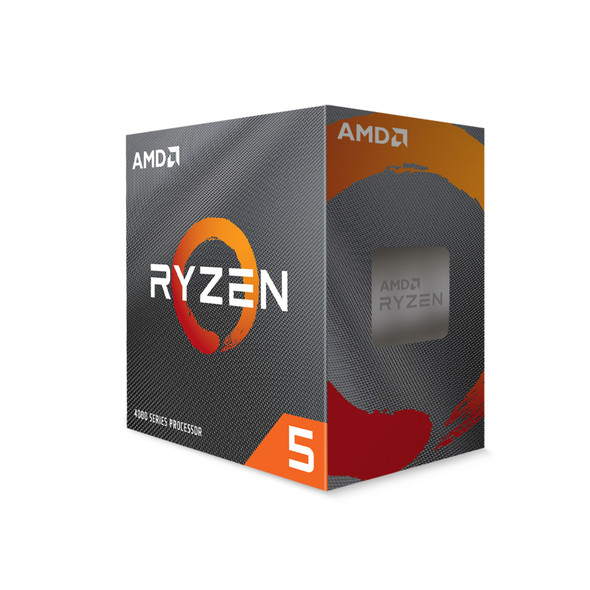
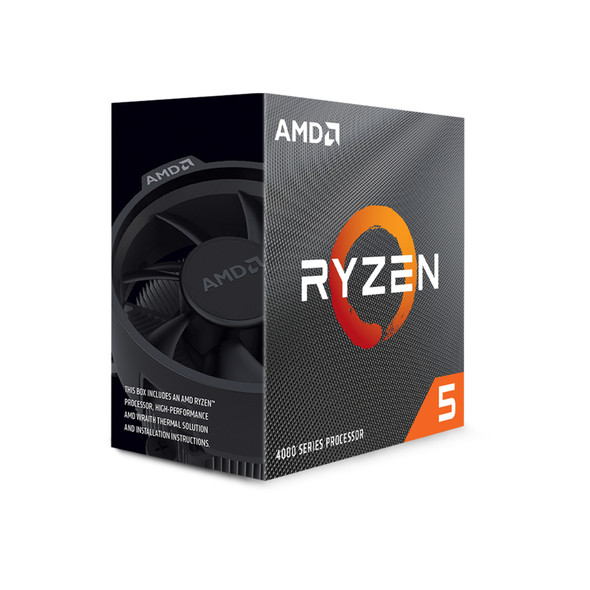
AMD Ryzen 5 4500 6 Core AM4 Processor, 12 Threads, 3.6GHz up to 4.1GHz Boost, 11MB Cache, 65W, with Wraith Stealth Cooler, No Graphics
AMD