
TP-LINK
TP-Link Omada EAP723 BE3600 Ceiling Mount Wi-Fi 7 Access Point
- SKU:
- NPTPL-EAP723
- UPC:
- 8885020623048
- MPN:
- EAP723
- Availability:
- Free Click & Collect in Peterborough. UK delivery also available.




Description
TP-Link Omada EAP723 BE3600 WiFi 7 Ceiling Mount Access Point – 2.5GbE PoE Business AP
The TP-Link Omada EAP723 is a compact BE3600 WiFi 7 ceiling mount access point designed for homes, offices, shops, cafés, clinics, classrooms, guest WiFi areas and small business networks that need fast, centrally managed wireless coverage. With dual-band WiFi 7 performance, a 2.5GbE Ethernet port, 802.3at PoE, Omada SDN management and support for up to 250+ clients, it is a strong upgrade from older WiFi 5 and WiFi 6 access points.
This access point is ideal for customers searching for a TP-Link Omada WiFi 7 access point, EAP723 BE3600 ceiling AP, business WiFi 7 access point, 2.5GbE PoE access point, or a professional wireless solution for small and medium-sized networks. It delivers combined wireless speeds of up to 3.6Gbps, with up to 2882Mbps on 5GHz and 688Mbps on 2.4GHz.
Key Features of the TP-Link Omada EAP723
- BE3600 dual-band WiFi 7 for faster and more efficient wireless networking
- Up to 2882Mbps on 5GHz and 688Mbps on 2.4GHz
- 1 x 2.5GbE Ethernet port to support higher wired uplink bandwidth
- 802.3at PoE support for cleaner installation with a compatible PoE+ switch or injector
- 160MHz channel bandwidth on 5GHz for higher WiFi 7 throughput in supported regions and devices
- WiFi 7 features including MLO, 4K-QAM, Multi-RUs and OFDMA with compatible clients
- Coverage up to 140m² / 1,500ft², depending on building layout and interference
- Supports 250+ concurrent clients, depending on traffic and wireless environment
- Omada Mesh and Seamless Roaming support when used with an Omada SDN controller
- Centralised Omada management through Omada hardware, software or cloud-based controllers
- Up to 16 SSIDs, with 8 SSIDs per band
- Business security features including WPA3, VLAN, captive portal, access control and rogue AP detection
- Ceiling, wall and junction box mounting kits included
- Power adapter not included
Next-Generation WiFi 7 for Business and Home Networks
The TP-Link Omada EAP723 uses WiFi 7 / 802.11be technology to improve wireless speed, capacity and efficiency compared with older wireless standards. It is designed for modern networks with multiple laptops, smartphones, tablets, payment terminals, VoIP devices, printers, smart devices and guest users connected at the same time.
With 4K-QAM, Multi-Link Operation, Multi-RUs, OFDMA and 160MHz bandwidth, the EAP723 can deliver faster and smoother wireless performance when connected devices also support the relevant WiFi 7 features. TP-Link notes that actual performance depends on client capability, network conditions, interference and building materials.
Dual-Band WiFi 7
The EAP723 is a dual-band WiFi 7 access point using 2.4GHz and 5GHz. It does not include a 6GHz radio. This is important for buyers comparing WiFi 7 access points, because some higher-end WiFi 7 models are tri-band with 6GHz support, while the EAP723 is focused on affordable dual-band WiFi 7 performance.
2.5GbE Port and PoE for Cleaner Installation
The built-in 2.5GbE Ethernet port helps reduce wired uplink bottlenecks compared with standard Gigabit-only access points, especially when multiple high-speed devices are connected. This makes the EAP723 a good option for users upgrading to multi-gigabit switches, faster broadband, local NAS access or heavier office wireless traffic.
The EAP723 supports 802.3at PoE, allowing power and data to run through one Ethernet cable when connected to a compatible PoE+ switch or injector. TP-Link also lists 12V/1.5A DC input support, but the power adapter is not included.
Important Power Note
To install this access point, you will normally need a compatible 802.3at PoE+ switch or PoE injector. A power adapter is not included in the package, so check your network equipment before ordering.
Omada SDN Cloud and Centralised Management
The EAP723 is part of the TP-Link Omada SDN ecosystem, which allows centralised management through an Omada hardware controller, software controller or cloud-based controller. This makes it suitable for business networks where multiple access points, switches and gateways need to be monitored and configured from one platform.
Through Omada, network administrators can manage SSIDs, guest WiFi, VLANs, access control, captive portal authentication, firmware updates, wireless schedules, reboot schedules, client isolation and network monitoring. Omada Mesh, Seamless Roaming, Captive Portal and Cloud Access require the use of an Omada SDN controller.
Useful Omada Features
- Centralised cloud, hardware or software controller management
- Omada app support
- Omada Mesh support
- Seamless roaming support
- Captive portal authentication
- Guest network isolation
- VLAN support
- Rogue AP detection
- Rate limiting
- Band steering
- Load balancing
- Airtime fairness
- Wireless schedule and reboot schedule
Strong Security for Guest and Business WiFi
The TP-Link Omada EAP723 includes security features suitable for managed business wireless networks. It supports WPA-Personal/Enterprise, WPA2-Personal/Enterprise and WPA3-Personal/Enterprise, along with access control, VLAN support, client isolation, MAC filtering and rogue AP detection.
These features make the EAP723 useful for shops, offices, reception areas and public-facing locations where staff and guest WiFi may need to be separated for security and performance.
Ceiling, Wall and Junction Box Mounting
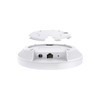
The EAP723 has a compact square design measuring approximately 160 x 160 x 36.7mm. It can be mounted on a ceiling, wall or junction box using the included mounting kits, giving installers flexibility when planning coverage in offices, shops, hospitality spaces or home networks.
Placement Advice for Best WiFi Coverage
For best results, place the access point in a central, open location and avoid installing it behind metal objects, inside cupboards or near heavy sources of interference. Ceiling mounting is often the best option for balanced coverage across a room or office floor.
Who Is the TP-Link Omada EAP723 Best For?
- Small businesses upgrading to WiFi 7
- Offices needing centrally managed wireless coverage
- Retail shops, cafés, clinics and reception areas
- Homes and home offices with many connected devices
- Guest WiFi networks using Omada captive portal features
- Installers building Omada SDN networks
- Users with PoE+ switches and multi-gigabit wired networks
Who Is This Access Point Not For?
The EAP723 is not the best choice if you specifically need 6GHz WiFi 7, outdoor weatherproof installation, a built-in router, or a plug-and-play mesh system designed for non-technical home users. It is a professional access point that works best with wired Ethernet backhaul and Omada management.
Technical Specifications
- Brand: TP-Link Omada
- Model: EAP723
- Product Type: Ceiling Mount Wireless Access Point
- WiFi Standard: WiFi 7 / IEEE 802.11be
- Wireless Standards: IEEE 802.11 a/b/g/n/ac/ax/be
- Wireless Class: BE3600
- Wireless Bands: Dual-band 2.4GHz and 5GHz
- 6GHz Support: No
- 2.4GHz Speed: Up to 688Mbps
- 5GHz Speed: Up to 2882Mbps
- Combined Wireless Speed: Up to approximately 3.6Gbps
- Ethernet Interface: 1 x 2.5G Ethernet port
- Power Supply: 802.3at PoE or 12V/1.5A DC
- Power Adapter: Not included
- Maximum Power Consumption: 16.8W with PoE / 13.0W with DC
- Coverage: Up to 140m² / 1,500ft²
- Concurrent Clients: 250+
- Antennas: 2.4GHz: 2 x 4.0dBi; 5GHz: 2 x 5.0dBi
- Wireless Features: MLO, 4K-QAM, EHT160, Multi-RUs, OFDMA, Mesh, Seamless Roaming, Band Steering, Beamforming, Airtime Fairness
- Multiple SSIDs: Up to 16, 8 per band
- Security: WPA/WPA2/WPA3 Personal and Enterprise, VLAN, captive portal, access control, rogue AP detection
- Management: Omada App, web-based management, Omada hardware/software/cloud controller support
- Mounting: Ceiling, wall or junction box mounting
- Dimensions: 160 x 160 x 36.7mm
- Operating Temperature: 0°C to 40°C
- Storage Temperature: -40°C to 70°C
- Operating Humidity: 10% to 90% non-condensing
- Storage Humidity: 5% to 90% non-condensing
- Certifications: CE, FCC, RoHS, IC
- Package Contents: EAP723, installation guide, ceiling/wall/junction box mounting kits
Important Performance Note
Maximum wireless speeds are theoretical physical rates. Actual speed, coverage and client capacity will vary depending on broadband speed, switch/uplink speed, PoE power, client device capability, WiFi settings, channel width, interference, walls, building materials and network traffic. WiFi 7 features such as MLO, 4K-QAM, Multi-RUs and 160MHz bandwidth require compatible client devices.
Why Buy the TP-Link Omada EAP723 BE3600 WiFi 7 Access Point?
The TP-Link Omada EAP723 is a strong choice for users who want an affordable professional WiFi 7 access point with centralised management, PoE installation, 2.5GbE uplink, guest WiFi options, business security features and compact ceiling-mount design. It is especially suitable for small businesses, offices, shops, home offices and Omada-managed networks that need a modern dual-band WiFi 7 upgrade.
Choose the EAP723 if you want a reliable business-class access point with WiFi 7 efficiency, Omada SDN features and flexible ceiling, wall or junction box installation.
Specification
TP-Link Omada EAP723 BE3600 WiFi 7 Access Point Specifications
The TP-Link Omada EAP723 is a compact BE3600 ceiling mount WiFi 7 access point designed for homes, offices, retail spaces, small businesses, classrooms and managed Omada networks. It supports dual-band WiFi 7, a 2.5GbE uplink, 802.3at PoE power, centralised Omada SDN management, 250+ clients and coverage of up to 140m².
General Information
| Brand | TP-Link |
| Product Family | Omada |
| Model | EAP723 |
| Product Name | TP-Link Omada EAP723 BE3600 Ceiling Mount WiFi 7 Access Point |
| Product Type | Ceiling Mount Wireless Access Point |
| Wireless Class | BE3600 |
| Recommended Use | Homes, offices, small businesses, retail spaces, cafés, classrooms, clinics, guest WiFi and Omada managed networks |
Wireless Performance
| WiFi Standard | WiFi 7 / IEEE 802.11be |
| Supported Wireless Standards | IEEE 802.11 a/b/g/n/ac/ax/be |
| Wireless Bands | Dual-band 2.4GHz and 5GHz |
| 6GHz Band Support | No |
| 2.4GHz Maximum Signal Rate | Up to 688Mbps |
| 5GHz Maximum Signal Rate | Up to 2882Mbps |
| Combined Theoretical Wireless Speed | Up to approximately 3.6Gbps |
| Channel Width | Up to 160MHz on 5GHz |
| Coverage | Up to 140m² / 1,500ft² |
| Concurrent Clients | 250+ clients |
| Multiple SSIDs | Up to 16 SSIDs, 8 per band |
Antenna Details
| Antenna Type | Internal antennas |
| 2.4GHz Antenna | 2 x 4.0dBi |
| 5GHz Antenna | 2 x 5.0dBi |
Networking and Power
| Ethernet Interface | 1 x 2.5G Ethernet port |
| PoE Support | 802.3at PoE |
| DC Power Input | 12V / 1.5A DC supported |
| Power Supply Method | 802.3at PoE or 12V / 1.5A DC |
| Power Adapter Included | No |
| Maximum Power Consumption with PoE | 16.8W |
| Maximum Power Consumption with DC | 13.0W |
| Button | Reset button |
WiFi 7 and Wireless Features
| Multi-Link Operation | Supported with compatible WiFi 7 clients |
| 4K-QAM | Supported with compatible WiFi 7 clients |
| Multi-RUs | Supported with compatible WiFi 7 clients |
| EHT160 | Supported |
| OFDMA | Supported |
| Beamforming | Supported |
| Band Steering | Supported |
| Load Balance | Supported |
| Airtime Fairness | Supported |
| QoS | WMM supported |
| Rate Limit | Supported |
| Wireless Schedule | Supported |
| Reboot Schedule | Supported |
Omada Management Features
| Management Platform | TP-Link Omada SDN |
| Standalone Management | Supported |
| Omada Controller Management | Supported through Omada hardware, software or cloud-based controller |
| Omada App | Supported |
| Centralised Cloud Management | Supported through Omada SDN |
| Omada Mesh | Supported when used with an Omada SDN controller |
| Seamless Roaming | Supported when used with an Omada SDN controller and compatible clients |
| Captive Portal | Supported when used with an Omada SDN controller |
Wireless Security
| WiFi Security | WPA-Personal, WPA2-Personal, WPA3-Personal, WPA-Enterprise, WPA2-Enterprise, WPA3-Enterprise |
| Access Control | Supported |
| VLAN Support | Supported |
| Guest Network | Supported |
| Guest Network Isolation | Supported |
| MAC Filtering | Supported |
| RADIUS Accounting | Supported |
| MAC Authentication | Supported |
| Rogue AP Detection | Supported |
Physical Specifications
| Dimensions | 160 x 160 x 36.7mm / 6.3 x 6.3 x 1.4in |
| Width | 160mm |
| Depth | 160mm |
| Height | 36.7mm |
| Mounting | Ceiling, wall or junction box mounting |
| Mounting Kits Included | Yes, ceiling, wall and junction box mounting kits included |
Environmental Specifications
| Operating Temperature | 0°C to 40°C |
| Storage Temperature | -40°C to 70°C |
| Operating Humidity | 10% to 90% RH, non-condensing |
| Storage Humidity | 5% to 90% RH, non-condensing |
Certifications and Compliance
| Certifications | CE, FCC, RoHS, IC |
| Indoor / Outdoor Use | Indoor use |
| Weatherproof Rating | Not listed as weatherproof |
Package Contents
| Access Point | 1 x TP-Link Omada EAP723 Access Point |
| Installation Guide | Included |
| Mounting Kits | Ceiling, wall and junction box mounting kits included |
| Power Adapter | Not included |
Important Compatibility Notes
Please check your network equipment before purchase. The TP-Link Omada EAP723 requires 802.3at PoE from a compatible PoE+ switch or injector, or a compatible 12V / 1.5A DC power adapter. The power adapter is not included. For centralised features such as Omada Mesh, Seamless Roaming and Captive Portal, an Omada SDN controller is required.
Important WiFi 7 Note
The EAP723 is a dual-band WiFi 7 access point using 2.4GHz and 5GHz. It does not include a 6GHz radio. WiFi 7 features such as MLO, 4K-QAM, Multi-RUs and 160MHz operation require compatible client devices and suitable network conditions.
Important Performance Note
Maximum wireless speeds are theoretical physical rates. Actual speed, range, coverage and client capacity will vary depending on broadband speed, switch/uplink speed, PoE power, client device capability, channel width, building materials, interference, AP placement and network traffic.
Return
FAQ: Frequenlty Asked Questions
TP-Link Omada EAP723 BE3600 Wi-Fi 7 Access Point FAQ
The TP-Link Omada EAP723 BE3600 Ceiling Mount Wi-Fi 7 Access Point is a compact business-class wireless access point designed for homes, offices, shops, cafés, warehouses, schools, and small business networks that need faster, more reliable Wi-Fi coverage. Below are the most common questions buyers ask before choosing this Omada Wi-Fi 7 access point, including speed, PoE power, 2.5GbE, Omada controller support, mesh, roaming, 6GHz limitations, installation, and real-world performance.
1. What is the TP-Link Omada EAP723?
The TP-Link Omada EAP723 is a ceiling or wall mountable Wi-Fi 7 access point designed for business, home office, and advanced home networks. It provides dual-band BE3600 Wi-Fi 7 performance, Omada SDN management support, a 2.5GbE port, PoE power, multiple SSIDs, guest network options, and centralised management features.
2. Is the TP-Link EAP723 a Wi-Fi 7 access point?
Yes. The EAP723 is a Wi-Fi 7 access point using the IEEE 802.11be standard. It supports key Wi-Fi 7 technologies such as 4K-QAM, Multi-RUs, 160MHz channel width, and, depending on hardware version and firmware, Multi-Link Operation for compatible devices.
3. What does BE3600 mean on the EAP723?
BE3600 refers to the combined theoretical wireless speed class of the access point. The TP-Link Omada EAP723 is rated up to 2882Mbps on 5GHz and 688Mbps on 2.4GHz, giving a combined theoretical total of around 3600Mbps. Real-world speeds are normally lower and depend on client device, signal strength, network settings, interference, and wired uplink speed.
4. Does the TP-Link EAP723 have 6GHz Wi-Fi?
No. The EAP723 is a dual-band Wi-Fi 7 access point, using 2.4GHz and 5GHz. It does not include a 6GHz radio. This makes it more affordable than many tri-band Wi-Fi 7 access points, but buyers wanting the clean 6GHz band should choose a tri-band Wi-Fi 7 model instead.
5. Can a Wi-Fi 7 access point work without 6GHz?
Yes. Wi-Fi 7 does not require 6GHz to be present on every access point. The EAP723 still supports Wi-Fi 7 features on its 2.4GHz and 5GHz bands. However, it will not provide the same 6GHz-band benefits available from higher-end tri-band Wi-Fi 7 access points.
6. Who is the TP-Link Omada EAP723 best for?
The EAP723 is best for users who want an affordable Wi-Fi 7 upgrade for a home, office, shop, café, small business, guest Wi-Fi network, or Omada-managed installation. It is especially useful where 5GHz Wi-Fi performance, centralised management, PoE installation, and multiple access points are more important than having a 6GHz band.
7. Who is the TP-Link EAP723 not for?
The EAP723 is not the best choice if you specifically need 6GHz Wi-Fi, maximum Wi-Fi 7 performance, outdoor weatherproof installation, a built-in router, or a plug-and-play consumer mesh kit with no networking setup. For those needs, consider a tri-band Wi-Fi 7 AP, outdoor Omada AP, or a consumer mesh router system instead.
8. Is the TP-Link EAP723 a router?
No. The EAP723 is an access point, not a router. It creates Wi-Fi coverage for an existing wired network. You still need a router or gateway to handle your internet connection, DHCP, firewall, and routing functions.
9. Do I need an Omada controller to use the EAP723?
No. The EAP723 can be used in standalone mode for simple installations. However, an Omada hardware controller, software controller, or cloud controller gives you centralised management, easier multi-AP configuration, monitoring, guest Wi-Fi options, roaming features, mesh control, firmware updates, and better scalability.
10. Can I manage the EAP723 from the cloud?
Yes. The EAP723 supports Omada cloud-based management when adopted into a compatible Omada controller or Omada cloud platform. This is useful for businesses, shops, offices, or installers who want to manage networks remotely.
11. Can I use the EAP723 at home?
Yes. Although it is business-focused, the EAP723 can work very well in advanced home networks, home offices, garden office setups, or homes with wired Ethernet and PoE switches. It is a good option for users who prefer a proper access point system instead of a standard all-in-one Wi-Fi router.
12. Is the TP-Link EAP723 good for small businesses?
Yes. The EAP723 is well suited to small businesses that need reliable Wi-Fi coverage, guest networks, multiple SSIDs, VLAN-friendly deployment, PoE installation, and centralised management through Omada. It is suitable for offices, retail shops, cafés, clinics, workshops, reception areas, and small commercial sites.
13. Does the EAP723 support PoE?
Yes. The TP-Link Omada EAP723 supports 802.3at PoE, also known as PoE+. This allows both power and data to run through one Ethernet cable when connected to a compatible PoE+ switch or PoE+ injector.
14. Does the EAP723 come with a power adapter?
The EAP723 can be powered by 802.3at PoE or by a 12V/1.5A DC power adapter, but TP-Link states that the power adapter is not included. For most installations, a compatible PoE+ switch or PoE+ injector is the cleanest option.
15. What type of PoE switch do I need for the EAP723?
You should use a switch or injector that supports 802.3at PoE+. A basic 802.3af PoE port may not provide enough power. For best performance, especially when using multiple access points, choose a PoE+ switch with enough total power budget for all connected devices.
16. Does the TP-Link EAP723 have a 2.5GbE port?
Yes. The EAP723 includes a 1× 2.5GbE RJ45 port. This helps reduce the chance of the wired connection limiting Wi-Fi performance, especially when using Wi-Fi 7 clients, 160MHz channels, and fast local network storage or internet connections above 1Gbps.
17. Can I use the EAP723 with a normal 1GbE switch?
Yes, but the wired uplink will be limited to 1Gbps if connected to a standard gigabit switch. The access point will still work, but you may not get the full benefit of its 2.5GbE port or the highest possible Wi-Fi 7 throughput in local network tests.
18. Why am I not getting the advertised BE3600 speed?
BE3600 is a theoretical combined wireless speed rating, not a guaranteed internet speed. Real-world speed depends on your phone, laptop, Wi-Fi adapter, channel width, distance, walls, interference, Omada settings, internet speed, Ethernet uplink speed, and whether the client supports Wi-Fi 7 features. A 1GbE switch, older client device, or 80MHz channel width can significantly reduce measured speeds.
19. What real-world speeds can I expect from the EAP723?
Real-world speeds vary widely. With a strong signal, compatible Wi-Fi 7 client, 160MHz channel width, good configuration, and a fast wired network, the EAP723 can deliver much faster performance than older Wi-Fi 5 or basic Wi-Fi 6 access points. However, internet speed tests may be limited by your broadband package, router, switch, cabling, or client device.
20. Does the EAP723 support 160MHz channel width?
Yes. The EAP723 supports 160MHz bandwidth on compatible 5GHz Wi-Fi connections. This can improve peak speeds for compatible clients, but it may not always be the best option in crowded Wi-Fi areas because wider channels can be more affected by interference and DFS channel restrictions.
21. Does the EAP723 support Multi-Link Operation?
The EAP723 supports Wi-Fi 7 features, and TP-Link lists Multi-RUs and, on V2/current firmware listings, Multi-Link Operation support. MLO requires compatible Wi-Fi 7 client devices and correct firmware/settings. If MLO does not appear, update the AP firmware and check your Omada controller version.
22. What is MLO on Wi-Fi 7?
MLO stands for Multi-Link Operation. It allows compatible Wi-Fi 7 devices to use more than one band or link together to improve throughput, reduce latency, or increase connection reliability. Both the access point and the client device must support it.
23. Does the EAP723 support seamless roaming?
Yes. The EAP723 supports seamless roaming when used with compatible Omada-managed access points and controller settings. This helps devices move between access points more smoothly in larger homes, offices, shops, or multi-room networks.
24. Does the EAP723 support Omada Mesh?
Yes. The EAP723 supports Omada Mesh when used with compatible Omada access points and controller configuration. Mesh can help extend coverage where Ethernet cabling is not available, but wired backhaul is usually better for maximum speed and stability.
25. Why is my EAP723 not pairing as a mesh access point?
Mesh pairing problems are usually caused by firmware mismatch, controller version, mesh not being enabled for the site, weak uplink signal, incompatible AP settings, adoption issues, VLAN/subnet problems, or power problems. Update firmware, confirm the AP is adopted by Omada first, enable mesh in the controller, and test the AP close to the wired root AP before moving it to its final location.
26. Should I use wired backhaul or mesh with the EAP723?
Wired Ethernet backhaul is recommended whenever possible because it gives the best speed, lowest latency, and most stable connection. Mesh is useful when running Ethernet is difficult, but mesh performance depends on the wireless signal between access points and may reduce maximum throughput.
27. Can the EAP723 be ceiling mounted?
Yes. The EAP723 is designed as a ceiling mount access point and includes mounting support for ceiling or wall installation. Ceiling placement is usually recommended for the best coverage pattern in rooms, offices, shops, and open areas.
28. Can the EAP723 be wall mounted?
Yes. The EAP723 can be wall mounted, but ceiling mounting is often better for even room coverage. If wall mounted, coverage may be stronger in front of the access point and weaker behind it, so placement and orientation matter.
29. Where should I install the TP-Link EAP723?
Install the EAP723 in a central location, ideally on the ceiling, away from thick walls, metal objects, large appliances, electrical interference, and corners. For business spaces, place access points based on floor layout, client density, and where users actually need strong Wi-Fi.
30. How much coverage does the EAP723 provide?
TP-Link lists coverage up to around 140㎡ / 1500ft² under stated conditions. Real-world coverage depends on walls, floors, building materials, ceiling height, interference, client devices, transmit power settings, and AP placement. Larger or more difficult buildings may need multiple access points.
31. How many devices can connect to the EAP723?
TP-Link lists support for 250+ concurrent clients. The practical number depends on what those devices are doing. Many light-use phones, tablets, and laptops are easier to support than many users streaming, gaming, video calling, or transferring large files at the same time.
32. Does the EAP723 support guest Wi-Fi?
Yes. The EAP723 supports multiple SSIDs and guest network features. When used with Omada management, it can support more advanced guest Wi-Fi options such as captive portal, access control, client isolation, authentication methods, and bandwidth limits depending on controller features.
33. How many SSIDs does the EAP723 support?
The EAP723 supports up to 16 SSIDs, with 8 SSIDs per band. This allows separate Wi-Fi networks for staff, guests, IoT devices, tills, office equipment, or private and public access when configured correctly.
34. Does the EAP723 support VLANs?
Yes. In an Omada network, the EAP723 can be used with VLAN-aware configuration to separate traffic, such as guest Wi-Fi, staff devices, IoT devices, and business systems. You will also need compatible router, switch, and controller settings for VLANs to work correctly.
35. Does the EAP723 support WPA3 security?
Yes. The EAP723 supports modern wireless security options including WPA3, depending on configuration and client compatibility. WPA3 can improve wireless security, but older devices may require WPA2 or mixed security mode to connect.
36. Is the EAP723 suitable for CCTV, tills, card machines, and business devices?
Yes, it can be suitable for business devices that connect over Wi-Fi, including tablets, tills, card terminals, scanners, and office devices. For critical systems such as CCTV recorders, servers, and main payment equipment, wired Ethernet is usually still preferred where possible.
37. Can I use multiple EAP723 access points together?
Yes. Multiple EAP723 access points can be used together, especially when managed through Omada. This is useful for larger homes, offices, retail spaces, warehouses, clinics, or buildings where one access point cannot cover the full area reliably.
38. Is the TP-Link EAP723 better than a normal Wi-Fi router?
The EAP723 is often better for coverage planning, ceiling placement, multi-AP networks, guest Wi-Fi, VLANs, and business-style management. However, it does not replace your router. A normal router may be simpler for basic home use, while an Omada AP setup is better for scalable and professionally managed Wi-Fi.
39. TP-Link EAP723 vs EAP773 — which should I choose?
Choose the EAP723 if you want a more affordable dual-band Wi-Fi 7 access point for 2.4GHz and 5GHz coverage. Choose a higher-end model such as the EAP773 if you need stronger Wi-Fi 7 performance, a 6GHz band, and more advanced tri-band capability for demanding environments.
40. TP-Link EAP723 vs Wi-Fi 6 access point — is it worth upgrading?
The EAP723 can be worth upgrading to if you want Wi-Fi 7 features, 2.5GbE uplink, 160MHz channels, better future device support, and Omada business management. If your devices are all older Wi-Fi 5 or Wi-Fi 6 clients and your current network is already fast enough, the improvement may be smaller.
41. Is the EAP723 suitable for outdoor use?
No. The EAP723 is an indoor ceiling/wall mount access point. For outdoor Wi-Fi, gardens, yards, loading areas, or weather-exposed locations, choose a suitable outdoor-rated Omada access point instead.
42. What should I check before buying the TP-Link Omada EAP723?
Before buying, check that you have a router or gateway, Ethernet cabling to the installation point, an 802.3at PoE+ switch or injector, suitable ceiling or wall mounting location, and client devices that can benefit from Wi-Fi 6 or Wi-Fi 7. Also remember that this is dual-band only and does not provide 6GHz Wi-Fi.
Related Products
Related Products


TP-LINK EAP653 AX3000 Ceiling Mount Wi-Fi 6 Access Point, PoE+, Omada Mesh, Ultra Slim Design
TP-LINK
TP-LINK (EAP773) BE9300 Tri-Band Ceiling Mount Wi-Fi 7 Access Point, PoE++, 10GB Port, 160MHz, Omada Mesh, MLO
TP-LINK