
APC
APC Smart-UPS C SMC3000I 3000VA 2100W UPS – Pure Sine Wave, LCD & AVR
- SKU:
- SMC3000I
- UPC:
- 0731304310105
- MPN:
- SMC3000I
- Availability:
- Free Click & Collect in Peterborough. UK delivery also available


Description
APC Smart-UPS C SMC3000I 3000VA / 2100W UPS – Pure Sine Wave Battery Backup with AVR
The APC Smart-UPS C SMC3000I is a high-capacity 3000VA / 2100W line-interactive uninterruptible power supply designed to protect servers, network equipment, business desktops, NAS systems, VoIP infrastructure, retail point-of-sale equipment and other critical electronics against power cuts, brownouts, voltage fluctuations and electrical disturbances.
Rated at 3000VA / 2100W, the SMC3000I provides pure sine-wave output while operating from battery, helping it support modern active-PFC power supplies and sensitive IT equipment. Its built-in Automatic Voltage Regulation (AVR) can correct supported high and low mains-voltage conditions without immediately switching to battery power.
The tower-format UPS provides eight IEC C13 outlets plus one IEC C19 outlet, with an IEC C20 mains input. A multifunction LCD provides access to UPS status and operating information, while USB and serial connectivity support communication with compatible APC PowerChute software for monitored and graceful system shutdown.
Model: APC Smart-UPS C SMC3000I | MPN: SMC3000I | EAN: 0731304310105 | Capacity: 3000VA / 2100W | Topology: Line Interactive
Key Features of the APC SMC3000I
- 3000VA / 2100W maximum output capacity
- Line-interactive UPS topology
- Pure sine-wave battery output
- Automatic Voltage Regulation (AVR)
- Nominal 230V input and output
- Supports 220V and 240V operating configurations
- Normal input-voltage range approximately 180–287V
- Adjustable input range approximately 170–300V
- 8 x IEC C13 outlets
- 1 x IEC C19 outlet
- IEC C20 mains input
- Multifunction graphic LCD
- USB communication
- Serial communication
- Compatible with APC PowerChute Serial Shutdown
- Internal lead-acid battery
- APCRBC150 replacement battery
- Approx. 3-hour typical battery recharge time
- Typical battery service life approximately 3–5 years, depending on conditions
- 300J surge-energy rating
- Full-time multi-pole noise filtering
- Approx. 6ms typical transfer time
- 45dBA rated acoustic level
- Tower form factor
- Approx. 43kg product weight
- 2-year APC repair-or-replace warranty, subject to manufacturer terms
3000VA / 2100W Power Capacity
The APC SMC3000I is rated at 3000VA and 2100W.
VA and watts are related but they are not interchangeable. For this UPS, the most important practical limit when sizing connected equipment is the 2100W maximum real-power rating.
Can the APC SMC3000I Power a 3000W Load?
No. The 3000VA rating does not mean the UPS can supply 3000 watts.
The SMC3000I is rated for a maximum output of 2100W. The combined real power consumption of connected equipment should remain within that limit.
For reliability and useful battery runtime, it is also sensible to leave capacity headroom rather than designing a system that continuously operates at the UPS's absolute maximum load.
What Does 3000VA Mean?
VA, or volt-amperes, describes apparent electrical power. Watts describe real power actually consumed by connected equipment.
The SMC3000I is therefore best described as a 3kVA UPS with a 2.1kW maximum output.
Pure Sine-Wave Battery Output
The SMC3000I provides a sine-wave output when operating from battery.
This makes it particularly appropriate for modern IT equipment using active power-factor-correction power supplies, including many servers, workstations, business PCs and network devices.
Why Is Pure Sine Wave Important?
Some sensitive or active-PFC power supplies can behave poorly with lower-cost UPS systems that generate a stepped or simulated waveform during battery operation.
A sine-wave UPS provides a waveform much closer to normal mains electricity, making it a stronger choice for business and IT equipment where power quality is important.
Line-Interactive UPS with Automatic Voltage Regulation
The SMC3000I uses a line-interactive topology.
During normal operation the UPS supplies power from the mains while monitoring voltage conditions. Its built-in Automatic Voltage Regulation can compensate for supported voltage fluctuations without using battery power unnecessarily.
What Does AVR Do?
AVR helps correct mains voltage that is too low or too high while keeping the UPS connected to utility power.
This can reduce unnecessary battery usage during brownouts and voltage fluctuations, helping reserve the battery for actual outages or conditions that cannot be corrected by AVR.
Wide Input Voltage Range
APC specifies a normal input operating range of approximately 180V to 287V, with an adjustable range extending approximately 170V to 300V.
This allows the UPS to tolerate significant mains-voltage variation before switching to battery operation, depending on its configuration.
Why Is a Wide Input Range Useful?
In locations where mains voltage frequently runs high or low, a wider acceptable input range can reduce unnecessary transfers to battery.
This can be particularly useful in business environments affected by repeated voltage dips, brownouts or unstable mains supply.
Line Interactive vs Online Double-Conversion UPS
The SMC3000I is a line-interactive UPS, not an online double-conversion UPS.
A line-interactive UPS normally powers the load from utility mains while using AVR to correct voltage conditions. During a power failure it transfers the load to battery and inverter operation.
An online double-conversion UPS continuously powers the load through its inverter, providing electrical isolation from the incoming AC supply but generally at a higher purchase price and with different efficiency and cooling characteristics.
Does the SMC3000I Have Zero Transfer Time?
No. Because it is line interactive rather than online double conversion, there is a short transfer interval when changing to battery power.
Published specifications for the SMC3000I list approximately 6ms typical transfer time, with approximately 10ms maximum under specified conditions.
Most conventional servers, network devices and PCs are designed to tolerate this short transfer period, but applications requiring zero-transfer operation should consider a true online UPS instead.
Battery Backup During Power Cuts
When incoming utility power fails or moves outside acceptable limits, the SMC3000I uses its internal battery and inverter to continue supplying connected equipment temporarily.
The available runtime gives users or shutdown software an opportunity to:
- Save active work
- Gracefully shut down servers or computers
- Keep networking equipment running through brief outages
- Maintain communications during short power interruptions
- Avoid abrupt power loss to supported equipment
How Long Will the APC SMC3000I Run?
UPS runtime depends heavily on the connected load.
At or near the full 2100W maximum load, published APC-based runtime data is approximately 5–6 minutes. Significantly lighter loads can operate for longer.
Runtime also changes with battery age, battery temperature, charge level and equipment power consumption, so runtime figures should always be treated as estimates rather than guaranteed durations.
Will It Run for Hours During a Power Cut?
The SMC3000I is primarily designed to provide short-term battery backup and safe shutdown, not hours of continuous operation at high load.
APC lists no external extended-runtime battery capability for this exact SMC3000I model.
Internal Lead-Acid Battery
The SMC3000I contains an internal lead-acid battery system.
APC specifies an expected battery service life of approximately 3–5 years, although real-world lifespan depends strongly on operating temperature, number of discharge cycles, discharge depth, charging conditions and general environment.
What Replacement Battery Does the SMC3000I Use?
The official APC replacement battery cartridge is:
APCRBC150 – APC Replacement Battery Cartridge #150
Using the correct replacement battery cartridge helps restore the UPS battery system to the intended manufacturer specification when the original batteries reach the end of their service life.
How Long Does the Battery Take to Recharge?
APC specifies a typical recharge time of approximately 3 hours.
Actual recharge time can vary depending on battery condition, starting charge level, temperature and operating conditions.
User-Replaceable Battery Design
The replaceable battery system allows the UPS itself to remain in service after its original battery reaches the end of its useful life.
This is particularly useful for business environments where replacing the complete UPS every few years would be unnecessarily expensive and disruptive.
Does Battery Life Mean the UPS Only Lasts 3–5 Years?
No. The 3–5 year figure refers to the expected battery service life under typical conditions, not necessarily the life of the complete UPS.
The battery can be replaced using the compatible APC cartridge when required.
Eight IEC C13 Outlets Plus One IEC C19 Outlet
The rear of the SMC3000I provides:
- 8 x IEC 320 / IEC 60320 C13 outputs
- 1 x IEC 320 / IEC 60320 C19 output
This provides nine protected AC output connections in total.
Does the SMC3000I Have UK 3-Pin Plug Sockets?
No. The UPS uses IEC output connectors rather than BS 1363 UK household sockets.
Connected equipment therefore needs suitable IEC power leads or appropriate power-distribution equipment.
Always ensure that cables and distribution accessories are correctly rated for the connected load.
What Is the IEC C19 Outlet For?
The larger IEC C19 output is commonly used for higher-current IT equipment or compatible power-distribution equipment.
The device connected to it must still remain within the UPS's total 2100W capacity and the applicable connector and cable ratings.
IEC C20 Mains Input
The UPS uses an IEC 320 / IEC 60320 C20 input connection.
This differs from the smaller C14 input commonly found on lower-capacity UPS systems and computers.
Before installation, ensure that the supplied or separately selected mains lead and upstream electrical circuit are suitable for the UPS and local electrical requirements.
Multifunction LCD Status Display
The front-mounted multifunction LCD provides visual information about UPS operating status and allows access to supported settings and diagnostics.
This can make it easier to check conditions such as:
- Input and output status
- Battery condition
- Load level
- UPS operating mode
- Warnings and alarms
- Configuration information
Why Is the LCD Useful?
The display allows important UPS information to be checked directly at the unit without relying exclusively on connected management software.
This is particularly useful during troubleshooting, maintenance and power events.
USB and Serial Communication
The SMC3000I supports both USB and serial communication.
These interfaces allow compatible computers and servers to communicate with the UPS for monitoring and controlled shutdown.
Can the UPS Shut Down a Server Automatically?
Yes, with compatible APC software and configuration.
APC specifically supports graceful shutdown using USB or serial communication with PowerChute Serial Shutdown.
This can help protect open files and operating systems during longer outages when battery capacity is approaching its configured shutdown threshold.
No Built-In SmartConnect Cloud Port
The SMC3000I should not be confused with newer APC Smart-UPS models that include a dedicated SmartConnect Ethernet/cloud-management port.
The current manufacturer specification for SMC3000I lists USB and serial connectivity.
Does the SMC3000I Include a Network Management Card?
No network management card is listed as included.
The model is designed around local USB / serial management rather than an integrated SmartConnect cloud-management interface.
300J Surge Protection
APC specifies a 300-joule surge-energy rating for the SMC3000I.
The UPS also provides full-time multi-pole noise filtering to help protect connected electronics against electrical noise and transient disturbances.
Does a UPS Replace Every Type of Surge Protection?
A UPS provides useful local power conditioning and surge protection, but complete electrical protection can also depend on the building's wiring, earthing, upstream protection and surge-protection design.
Designed for Servers and Network Equipment
APC specifically positions the SMC3000I for applications such as:
- Entry-level servers
- Network switches
- Routers
- Business desktops
- VoIP equipment
- Retail point-of-sale systems
- Edge-network infrastructure
- Other critical IT equipment
Suitable for NAS Systems
A NAS can benefit significantly from UPS protection because unexpected power loss can interrupt disk writes, services and storage operations.
When the NAS and software environment support compatible UPS communication, a properly configured battery backup can provide enough time to perform a controlled shutdown during an extended outage.
How Do I Size the UPS for a NAS?
Add the maximum expected power consumption of the NAS, any expansion units, network switches, routers and other equipment you intend to connect.
That total should remain comfortably below the SMC3000I's 2100W maximum output rating.
Suitable for Business Workstations
The pure sine-wave output also makes the SMC3000I appropriate for many higher-performance workstations and desktop systems using active-PFC power supplies.
When sizing the UPS, consider the maximum possible power consumption of the workstation, displays and any other connected equipment rather than using only average idle consumption.
Can the APC SMC3000I Be Used with a Gaming PC?
Yes, provided the total load remains within specification.
Its sine-wave output is appropriate for modern PC power supplies, but a high-performance gaming PC can draw substantially more power under load than while idle.
Include the PC, monitor and other devices when calculating the total UPS load.
Not a Rackmount UPS
The SMC3000I is a tower-format UPS.
APC specifies it as non-rackmountable in its standard configuration, so customers requiring a conventional 19-inch rack UPS should choose a rackmount Smart-UPS model instead.
Physical Size and Weight
The SMC3000I is a large and heavy UPS because of its 3kVA power electronics and internal lead-acid battery system.
Approximate dimensions are:
- Width: 197mm
- Height: 435mm
- Depth: 544mm
- Net weight: 43kg
How Heavy Is the APC SMC3000I?
The UPS weighs approximately 43kg without its shipping packaging.
Plan installation carefully and use appropriate manual-handling procedures. The packaged shipping weight is approximately 51kg.
45dBA Rated Acoustic Level
APC specifies an acoustic level of approximately 45dBA.
The SMC3000I therefore should not be assumed to be silent, especially in a very quiet office or home environment.
For server rooms, network cupboards and business environments, this is generally less important than in a bedroom or studio.
Operating Environment
APC specifies:
- Operating temperature: 0°C to 40°C
- Storage temperature: -15°C to 45°C
- Operating humidity: 0–95%
- Operating altitude: up to approximately 3,048 metres / 10,000ft
Battery life is affected by temperature, so installing the UPS in a cool, well-ventilated environment is preferable to placing it near heat-producing equipment.
Green Mode for Efficient Operation
APC describes the Smart-UPS C platform as supporting a Green Mode designed to achieve high operating efficiency when incoming power conditions are suitable.
Reducing unnecessary electrical conversion can lower heat generation and ongoing energy use while maintaining UPS protection.
Audible Battery and Low-Battery Alarms
The SMC3000I includes configurable audible notifications for important UPS conditions.
APC lists:
- On-battery alarm
- Distinctive low-battery alarm
- Configurable alarm delays
The LCD and software management tools provide additional status information for supported events.
Output Quality
APC specifies output harmonic distortion of less than 5% at full load.
Output frequency is nominally 50Hz synchronised to the mains for the SMC3000I's standard 230V configuration.
APC SMC3000I vs a Basic UPS
The SMC3000I is designed for substantially larger and more demanding loads than entry-level desktop backup products.
Key advantages include:
- 3000VA / 2100W capacity
- Pure sine-wave output
- AVR voltage correction
- Large internal battery system
- Nine IEC outputs
- C19 support for higher-current equipment
- LCD monitoring
- USB and serial communication
- Replaceable APCRBC150 battery
- Business-oriented Smart-UPS platform
Who Is the APC Smart-UPS C SMC3000I Best For?
- Small and medium businesses
- Entry-level servers
- NAS and storage systems
- Network switches and routers
- VoIP infrastructure
- Business desktops and workstations
- Retail point-of-sale systems
- Edge-network equipment
- IT environments requiring pure sine-wave backup
- Users needing significantly more capacity than a basic desktop UPS
Important Things to Know Before Buying
- The exact model is SMC3000I.
- Rated capacity is 3000VA / 2100W.
- The maximum real-power load is 2100W, not 3000W.
- The UPS uses line-interactive topology, not online double conversion.
- Battery waveform is pure sine wave.
- The UPS has AVR for supported high and low mains voltage conditions.
- There is a short transfer time to battery; this is not a zero-transfer online UPS.
- Output connections are 8 x IEC C13 + 1 x IEC C19.
- There are no standard UK BS 1363 sockets built into the UPS.
- The mains input connector is IEC C20.
- Battery type is internal lead acid.
- The official replacement battery is APCRBC150.
- Typical recharge time is approximately 3 hours.
- Typical battery service life is approximately 3–5 years, depending on operating conditions.
- The unit weighs approximately 43kg.
- The SMC3000I is a tower UPS rather than a conventional rackmount model.
- Management connectivity is USB and serial.
- APC lists a 2-year repair-or-replace warranty, subject to warranty terms.
APC Smart-UPS C SMC3000I Technical Highlights
- Brand: APC by Schneider Electric
- Range: APC Smart-UPS C
- Model / MPN: SMC3000I
- EAN: 0731304310105
- Product Type: Uninterruptible Power Supply
- Topology: Line Interactive
- Form Factor: Tower
- Rated Power: 3000VA / 2100W
- Main Input Voltage: 230V
- Other Supported Input Voltages: 220V / 240V
- Main Output Voltage: 230V
- Input Frequency: 47–63Hz
- Output Frequency: 50Hz synchronised to mains
- Input Operating Range: Approx. 180–287V
- Adjustable Input Range: Approx. 170–300V
- Waveform: Sine wave
- Output Harmonic Distortion: Less than 5% at full load
- Typical Transfer Time: Approx. 6ms
- Input Connector: IEC 320 / IEC 60320 C20
- Output Connectors: 8 x IEC C13 + 1 x IEC C19
- Battery Type: Internal lead-acid battery
- Replacement Battery: APCRBC150
- Battery Energy: Approx. 552VAh manufacturer runtime rating
- Battery Charger Power: 183W rated
- Typical Recharge Time: 3 hours
- Typical Battery Life: 3–5 years
- Extended External Runtime Battery Support: No external runtime expansion specified
- Control Panel: Multifunction LCD
- Communication: USB and serial
- Software: Compatible with APC PowerChute Serial Shutdown
- Surge Energy Rating: 300J
- Noise Filtering: Full-time multi-pole filtering
- Acoustic Level: Approx. 45dBA
- Heat Dissipation: Approx. 135 BTU/h
- Operating Temperature: 0°C to 40°C
- Storage Temperature: -15°C to 45°C
- Operating Humidity: 0–95%
- Operating Altitude: Up to approx. 3,048m / 10,000ft
- Width: 197mm
- Height: 435mm
- Depth: 544mm
- Net Weight: Approx. 43kg
- Packaged Weight: Approx. 51kg
- Colour: Black
- Manufacturer Warranty: 2 years repair or replace, subject to APC terms
What's Included?
- 1 x APC Smart-UPS C SMC3000I UPS
- Internal lead-acid battery system
- USB communication cable
- APC documentation / supplied documentation package
Connected equipment, IEC output power leads, network-management hardware and replacement APCRBC150 battery are not included unless specifically stated separately.
Why Choose the APC Smart-UPS C SMC3000I?
The APC Smart-UPS C SMC3000I is designed for users who need substantially more protection and capacity than a basic desktop UPS but do not require a full online double-conversion system.
Its combination of 3000VA / 2100W output capacity, pure sine-wave battery power and AVR makes it suitable for a wide range of modern servers, network equipment, workstations and business systems.
The nine IEC outputs provide flexibility for multiple IT devices, while the dedicated C19 outlet supports compatible higher-current equipment. USB and serial communication also allow supported servers and computers to perform controlled shutdowns through APC PowerChute software rather than simply losing power when the battery is exhausted.
The replaceable APCRBC150 battery system helps extend the useful service life of the UPS, while the front LCD provides immediate access to operating information, warnings and system status.
For small businesses, server rooms, network installations, NAS systems and professional workstations requiring a 3kVA line-interactive UPS with 2100W real-power capacity, pure sine-wave output, AVR, LCD monitoring and APC's established Smart-UPS platform, the SMC3000I provides a robust business-grade power-protection solution.
Specification
APC Smart-UPS C SMC3000I Specifications
The APC Smart-UPS C SMC3000I is a 3000VA / 2100W line-interactive tower UPS designed for servers, network equipment, NAS systems, business workstations, retail POS, VoIP and other critical electronics. It provides pure sine-wave battery output, Automatic Voltage Regulation (AVR), a multifunction LCD, USB and serial communication, and an internal replaceable lead-acid battery system.
General Information
| Brand | APC by Schneider Electric |
| Product Range | APC Smart-UPS C |
| Model / MPN | SMC3000I |
| EAN / GTIN | 0731304310105 |
| Product Type | Uninterruptible Power Supply (UPS) |
| UPS Topology | Line Interactive |
| Form Factor | Tower |
| Rack Units | 0U – not a rackmount model |
| Colour | Black |
Power Capacity
| Rated Apparent Power | 3000VA / 3kVA |
| Rated Real Power | 2100W / 2.1kW |
| Maximum Configurable Power | 3000VA / 2100W |
| Rated VA-to-Watt Ratio | 0.70 based on 3000VA / 2100W rating |
Input Specifications
| Main Input Voltage | 230V AC |
| Other Supported Input Voltages | 220V / 240V |
| Input Frequency | 47–63Hz |
| Normal Input Voltage Range | 180–287V |
| Adjustable Input Voltage Range | 170–300V |
| Input Connection | IEC 60320 C20 |
Output Specifications
| Main Output Voltage | 230V AC |
| Output Frequency | 50Hz synchronised to mains |
| Battery Output Waveform | Pure sine wave / sine wave |
| Output Harmonic Distortion | Less than 5% at full load |
| Crest Factor | 3:1 |
| Automatic Voltage Regulation | Yes – AVR |
AC Output Connections
| Total AC Output Outlets | 9 |
| IEC C13 Outputs | 8 x IEC 60320 C13 |
| IEC C19 Outputs | 1 x IEC 60320 C19 |
| UK BS 1363 3-Pin Output Sockets | No |
| Battery-Backed Outputs | Yes |
Transfer & UPS Operation
| Topology | Line Interactive |
| Typical Transfer Time | Approx. 6ms |
| Zero-Transfer Online UPS | No |
| Cold Start Capability | Yes – battery operation can provide temporary power when utility power is unavailable |
| Green Mode | Yes – designed for high-efficiency operation during suitable mains conditions |
Battery Specifications
| Battery Type | Internal lead-acid battery |
| Battery Included | Yes |
| User-Replaceable Battery | Yes |
| Official Replacement Battery | APCRBC150 – APC Replacement Battery Cartridge #150 |
| Replacement Battery Quantity | 1 cartridge |
| Battery VAH Capacity | 552VAh runtime rating |
| Battery Charger Power | 183W rated |
| Typical Recharge Time | Approx. 3 hours |
| Typical Battery Service Life | Approx. 3–5 years depending on temperature, use and battery cycling |
| External Extended-Runtime Battery Support | No – APC lists extended runtime as 0 for this model |
Battery Runtime
| Runtime Type | Load dependent |
| Maximum Supported Real Load | 2100W |
| Manufacturer Runtime Specification | APC provides a load-specific runtime graph rather than one fixed universal runtime figure |
| Runtime Expansion | No external runtime battery expansion specified for SMC3000I |
Display & Audible Alarms
| Control Panel | Multifunction LCD status and control console |
| LCD Display | Yes |
| LED Status Indicators | Yes |
| On-Battery Alarm | Yes |
| Low-Battery Alarm | Yes – distinctive low-battery alarm |
| Alarm Delay Configuration | Supported |
Communication & Management
| USB Port | Yes |
| Serial Port | Yes |
| PowerChute Support | Yes – compatible with APC PowerChute Serial Shutdown / supported APC shutdown software |
| Graceful Computer / Server Shutdown | Supported through compatible USB or serial connection and software |
| SmartConnect Ethernet Port | No |
| SmartSlot | No SmartSlot listed for the SMC3000I tower model |
| Network Management Card Included | No |
Surge Protection & Filtering
| Surge Energy Rating | 300J |
| Noise Filtering | Full-time multi-pole noise filtering |
| IEEE Surge Let-Through | 0.3% |
| Clamping Response | Zero clamping response time stated in APC datasheet |
Physical Specifications
| Width | 197mm |
| Height | 435mm |
| Depth | 544mm |
| Dimensions | 197 x 435 x 544mm (W x H x D) |
| Net Weight | 43kg |
| Mounting Mode | Tower / not rack-mountable |
Acoustic & Thermal Specifications
| Acoustic Level | Approx. 45dBA |
| Heat Dissipation | Approx. 135 BTU/h |
Environmental Specifications
| Operating Temperature | 0°C to 40°C |
| Storage Temperature | -15°C to 45°C |
| Operating Relative Humidity | 0–95% |
| Storage Relative Humidity | 0–95% |
| Operating Altitude | 0–3,048m / 0–10,000ft |
| Storage Altitude | 0–15,240m |
Package Specifications
| Package Height | 762mm |
| Package Width | 699mm |
| Package Length | 381mm |
| Packaged Weight | Approx. 51kg |
| Units per Package | 1 |
Compliance & Standards
| Product Certifications | CE, EAC, SABS, VDE and other applicable regional certifications |
| UPS Safety Standard | EN/IEC 62040-1:2019/A11:2021 |
| EMC / UPS Standard | EN/IEC 62040-2 |
| WEEE | Subject to separate electrical / electronic waste collection requirements where applicable |
Environmental Product Data
| Current Schneider Lifecycle Carbon Footprint | Approx. 2,969kg CO2e |
| Average Recycled Plastic Content | 15% |
| Recyclability Potential | 58% under Schneider Electric's stated assessment methodology |
| Recycled Cardboard Packaging | Yes – Schneider states minimum 70% recycled cardboard content outside applicable regional exceptions |
Package Contents
| APC Smart-UPS C SMC3000I | Included |
| Internal Lead-Acid Battery System | Included |
| USB Cable | Included according to APC datasheet |
| Software / Documentation Media | Listed by APC datasheet; exact physical media may vary by production revision |
| APCRBC150 Replacement Cartridge | Not an additional spare – APCRBC150 is the replacement part for the installed battery system |
| Network Management Card | Not included |
Manufacturer Warranty
| APC Warranty | 2 years repair or replace |
| Warranty Conditions | Subject to APC / Schneider Electric warranty terms and applicable UK consumer rights |
Important 3000VA vs 2100W Note
The SMC3000I is rated at 3000VA but only 2100W of maximum real power. It must not be treated as a 3000W UPS.
When sizing the UPS, add together the maximum expected real-power consumption of all connected equipment and ensure the total remains within the 2100W rating. Leaving additional capacity headroom is preferable to continuously operating at the absolute maximum.
Important Pure Sine-Wave Note
APC specifies the SMC3000I as a pure sine-wave / sine-wave UPS. This makes it suitable for many modern power supplies, including compatible active-PFC server, workstation and desktop PC power supplies, subject to correct UPS sizing.
Important Line-Interactive Note
The SMC3000I is a line-interactive UPS, not an online double-conversion UPS. It uses AVR to correct supported mains-voltage variations and transfers to battery/inverter operation when required.
Because it is line interactive, the unit has a short transfer interval of approximately 6ms typical. It should not be advertised as having zero transfer time.
Important Input Voltage Note
APC specifies a normal mains operating range of approximately 180–287V and an adjustable input range of approximately 170–300V.
The 170–300V values therefore represent the wider configurable range rather than the standard operating window.
Important Outlet Note
The SMC3000I has 8 x IEC C13 and 1 x IEC C19 output outlets. It does not contain standard UK BS 1363 three-pin sockets.
Suitable IEC power leads or appropriately rated power-distribution equipment are therefore required for connected devices.
Important Battery Runtime Note
Battery runtime varies significantly with connected load, battery age, battery temperature and battery condition. APC provides a load-specific runtime graph for this model rather than one universal runtime specification.
Do not advertise a fixed runtime as though it applies to every installation.
Important Replacement Battery Note
The official APC replacement cartridge for the SMC3000I is APCRBC150. APC specifies an approximate battery service life of 3–5 years under typical conditions and a typical recharge time of approximately 3 hours.
Battery life can be shortened by elevated temperatures, repeated deep discharge cycles and other operating conditions.
Important External Battery Note
APC lists extended runtime as 0 for the SMC3000I. It should therefore not be advertised as supporting APC external extended-runtime battery packs unless APC publishes a compatible expansion option for this exact model.
Important SmartConnect / SmartSlot Note
The SMC3000I provides USB and serial communication for UPS monitoring and graceful shutdown through compatible APC software.
This exact model should not be confused with newer Smart-UPS variants that include a dedicated SmartConnect Ethernet/cloud port or SmartSlot. Those features are not listed for the standard SMC3000I tower model.
Important Operating Altitude Correction
The correct APC operating altitude is 0–3,048m / 0–10,000ft.
The 15,240m figure sometimes found in syndicated product feeds is the storage altitude, not the permitted operating altitude.
Important Carbon Footprint Update
Schneider Electric's current environmental data lists a total lifecycle carbon footprint of approximately 2,969kg CO2e for the SMC3000I.
An older syndicated figure of approximately 3,920kg CO2e should therefore not be used as the current Schneider Electric environmental value.
Important Weight & Handling Note
The UPS weighs approximately 43kg and approximately 51kg when packaged. Suitable manual-handling procedures should be used when moving or installing the unit.
Return
FAQ: Frequenlty Asked Questions
APC Smart-UPS C SMC3000I 3000VA 2100W FAQ
The APC Smart-UPS C SMC3000I is a 3000VA / 2100W line-interactive uninterruptible power supply designed to protect servers, NAS systems, network equipment, business workstations, VoIP systems and other critical electronics. It provides pure sine-wave battery output, Automatic Voltage Regulation (AVR), eight IEC C13 outlets, one IEC C19 outlet, a graphic LCD and USB/serial communication for monitoring and graceful shutdown.
Below are answers to the most common questions about APC SMC3000I runtime, 3000VA vs 2100W capacity, pure sine-wave output, AVR, server and NAS compatibility, active-PFC power supplies, PowerChute, battery replacement, UPS noise, generators, IEC connections, graceful shutdown and UPS sizing.
1. What is the APC Smart-UPS C SMC3000I?
The APC SMC3000I is a 230V line-interactive uninterruptible power supply rated at up to 3000VA / 2100W. It provides battery backup, surge protection, Automatic Voltage Regulation and pure sine-wave output for compatible servers, network equipment, workstations, NAS systems and other critical electronics.
2. What is the exact model number?
The exact manufacturer model and part number is SMC3000I.
3. What is the EAN of the APC SMC3000I?
The EAN is 0731304310105.
4. What is the maximum power capacity of the SMC3000I?
The SMC3000I is rated for a maximum configurable output of 3000VA and 2100W. Connected equipment must remain within both the VA and watt limits.
5. What is the difference between 3000VA and 2100W?
VA measures apparent electrical power, while watts represent real power consumed by the connected equipment. The SMC3000I may be marketed as a 3000VA UPS, but its maximum real-power output is 2100W, so load calculations should never be based on 3000VA alone.
6. Can I connect equipment totalling exactly 2100W?
2100W is the UPS maximum rated real-power capacity rather than an ideal everyday design target. Leaving additional headroom is sensible for startup surges, temporary power spikes and future expansion. APC troubleshooting guidance recommends avoiding continuous operation at the absolute maximum load.
7. How much load should I normally put on a 2100W UPS?
APC commonly recommends allowing capacity headroom rather than operating continuously at 100% load. An approximate 80% design target would be around 1680W, although the correct margin depends on the connected equipment and its startup or transient power requirements.
8. Is the APC SMC3000I a pure sine-wave UPS?
Yes. APC specifies sine-wave output for the SMC3000I when operating from battery power, making it suitable for sensitive electronic equipment and many modern active-PFC computer power supplies.
9. Why is pure sine-wave output useful?
Pure sine-wave output closely resembles normal utility AC power. It is generally the safer compatibility choice for servers, workstations and computers with active-PFC power supplies and can avoid the buzzing, instability or shutdown problems that some equipment experiences with stepped or simulated sine-wave UPS output.
10. Is pure sine wave required for an active-PFC PC power supply?
Not every active-PFC PSU will fail on simulated sine-wave power, but compatibility varies between power-supply designs. Pure sine wave provides the more predictable and broadly compatible UPS output, especially for high-performance PCs, servers and sensitive power supplies.
11. Is the SMC3000I good for a gaming PC?
Yes, provided the complete gaming system remains within the UPS load limits. Its pure sine-wave output is particularly useful with modern high-performance active-PFC PC power supplies. Consider the maximum combined load of the PC, monitors and accessories rather than only the PSU's advertised wattage.
12. Can I connect a high-end gaming PC with a 1000W or 1200W PSU?
Potentially yes. A PSU's rating is its maximum capability, not necessarily the amount of power the computer continuously consumes. What matters is the system's actual maximum input load during gaming or other intensive workloads together with any monitors and peripherals connected to the UPS.
13. Is the APC SMC3000I suitable for servers?
Yes. APC specifically positions the SMC3000I for entry-level servers and network equipment. Its pure sine-wave output, high capacity, AVR and USB/serial shutdown communication make it appropriate for many small-business and home-lab server installations.
14. Is the SMC3000I suitable for a NAS?
Yes. It can protect compatible NAS systems from outages, brownouts and other power disturbances. USB communication may also allow a compatible NAS or attached computer to detect a power failure and perform an orderly shutdown.
15. Can I use the APC SMC3000I with Synology NAS?
Potentially yes. Many Synology NAS systems support USB-connected UPS monitoring, but compatibility depends on the NAS model, DSM version and supported UPS implementation. Check Synology's current compatibility and configuration information before relying on automated shutdown.
16. Can I use the SMC3000I with TrueNAS, Unraid or Proxmox?
Yes as a power source, provided the equipment remains within its capacity. Automated shutdown support depends on the operating system and UPS-monitoring software being used. APC officially supports PowerChute Serial Shutdown, while third-party tools such as NUT depend on the platform and configuration.
17. Is it suitable for network switches, routers and firewalls?
Yes. APC specifically positions the Smart-UPS C range for network devices. Routers, switches, firewalls, controllers and VoIP equipment generally consume much less power than the UPS's maximum capacity, potentially providing useful backup time during an outage.
18. Can it protect CCTV or NVR equipment?
Yes. A compatible NVR, PoE switch and network equipment can be connected provided their combined power requirements remain within the UPS capacity. The runtime will depend on the combined load, particularly if a PoE switch is powering multiple cameras.
19. Is the SMC3000I suitable for business VoIP systems?
Yes. APC specifically lists business VoIP among the intended applications for this model. Protecting network switches, routers and phone-system equipment can help maintain communications during brief mains failures.
20. Can I use the SMC3000I for a workstation?
Yes. Its 2100W power capacity makes it suitable for many professional workstation configurations, including systems with powerful CPUs and GPUs, subject to the total measured load and required runtime.
21. What type of UPS topology does the SMC3000I use?
The SMC3000I uses a line-interactive topology. During normal operation it supplies utility power while regulating voltage, then switches to battery/inverter operation when incoming power moves outside acceptable limits or fails completely.
22. Is the SMC3000I an online double-conversion UPS?
No. It is line-interactive rather than double-conversion online. An online UPS continuously supplies the load through its inverter and typically provides zero transfer time, whereas the SMC3000I transfers to battery operation when required.
23. What is the transfer time when mains power fails?
APC specifies transfer time for its line-interactive Smart-UPS families according to sensitivity setting. Typical ranges are approximately 2–4ms at high sensitivity, 6–8ms at medium sensitivity and 8–10ms at low sensitivity. Most computer power supplies are designed to tolerate a short interruption of this type.
24. What is AVR on the APC SMC3000I?
AVR means Automatic Voltage Regulation. It allows the UPS to correct certain high or low incoming-voltage conditions without immediately switching to battery power.
25. Why is AVR useful?
AVR can compensate for brownouts and over-voltage conditions while preserving battery capacity for genuine outages. Reducing unnecessary battery transfers can also help reduce battery wear.
26. What input-voltage range does the SMC3000I support?
The standard operating input range is approximately 180–287V, with an adjustable range of approximately 170–300V depending on the selected UPS settings.
27. What is the nominal input and output voltage?
The SMC3000I is designed primarily for 230V AC systems and also supports appropriate 220V and 240V configurations.
28. What input frequency does the UPS accept?
APC specifies an input-frequency range of approximately 47–63Hz.
29. What is the output-frequency specification?
The SMC3000I provides nominal 50Hz output and synchronises its output frequency with the incoming mains supply under normal conditions.
30. How many power outlets does the SMC3000I have?
It provides nine IEC outputs in total: eight IEC C13 outlets and one higher-current IEC C19 outlet.
31. What is the difference between IEC C13 and C19 outlets?
IEC C13 outlets are commonly used for PCs, servers, monitors and network equipment. The larger IEC C19 connection is intended for equipment requiring a higher-current IEC connection. The total load across all outputs must remain within the UPS rating.
32. What type of mains input connector does the SMC3000I use?
The UPS itself uses an IEC 60320 C20 input. The mains lead used with it must have a suitable IEC C19 connector at the UPS end and be correctly rated for the installation.
33. Can I plug the SMC3000I into a normal UK mains supply?
The UPS is a 230V model suitable for UK-voltage installations, but its physical input is IEC C20 rather than a permanently attached UK plug. Use the correct appropriately rated mains lead and ensure the wall circuit is suitable for the connected load.
34. Does the APC SMC3000I have an LCD screen?
Yes. It has a multifunction graphic LCD status and control console that provides information about UPS operation, battery status, load and power conditions.
35. What can I see on the UPS LCD?
The LCD provides key operating information such as load level, battery status, power conditions and UPS warnings, allowing important status information to be checked directly without a computer.
36. Does the SMC3000I have audible alarms?
Yes. The UPS can provide audible warnings when operating on battery, when battery charge becomes low and when certain fault or overload conditions occur. Some alarm behaviour can be configured.
37. Can I monitor the APC SMC3000I through USB?
Yes. The SMC3000I supports USB communication and can communicate with compatible UPS-management software for status monitoring and shutdown functions.
38. Does the SMC3000I have a serial communications port?
Yes. APC lists both USB and serial communication for this model.
39. What software can I use with the SMC3000I?
APC currently supports the Smart-UPS SMC series with PowerChute Serial Shutdown, allowing compatible computers and servers to monitor UPS events and perform an orderly operating-system shutdown during an extended power outage.
40. Can the SMC3000I automatically shut down a server?
Yes. With the correct USB or serial communication connection and compatible PowerChute Serial Shutdown configuration, the UPS can help initiate a graceful server shutdown before the battery is exhausted.
41. Why is graceful shutdown important for a server or NAS?
A graceful shutdown allows the operating system to close applications, flush cached writes and unmount storage correctly. This can reduce the risk of filesystem corruption, unfinished writes and service problems compared with suddenly losing power when the UPS battery becomes empty.
42. Does the SMC3000I have APC SmartConnect cloud monitoring?
No. The original SMC3000I does not include the Ethernet SmartConnect cloud-management port found on selected newer APC models.
43. Does the SMC3000I have a SmartSlot for a network-management card?
No. The tower SMC3000I does not provide the SmartSlot expansion interface found on higher-feature APC Smart-UPS models. Its standard management interfaces are USB and serial.
44. Can I monitor the SMC3000I directly over Ethernet?
Not through a built-in Ethernet interface. The SMC3000I is primarily monitored through USB or serial communication connected to a compatible computer or server.
45. How long will the APC SMC3000I run during a power cut?
Runtime depends heavily on the connected load, battery age, battery condition, temperature and UPS configuration. A lightly loaded 3000VA UPS can run much longer than the same UPS operating close to its 2100W maximum, so there is no single runtime figure that applies to every installation.
46. Why does UPS runtime fall so quickly as the load increases?
Battery runtime is not linear. Higher loads draw substantially more current from the battery, so doubling the load can reduce runtime by more than half depending on the battery and inverter characteristics.
47. Is the runtime shown on the LCD exact?
No. It is an estimate based on the connected load, battery condition and previous discharge information. APC notes that runtime estimates can be less accurate when the connected load is very small relative to the UPS capacity.
48. How can I get the most accurate runtime estimate?
Use the UPS with the intended equipment connected and allow the battery to become fully charged. APC notes that runtime estimation becomes more meaningful with a reasonable connected load rather than when the UPS is almost unloaded.
49. Does the SMC3000I support external battery packs for longer runtime?
No external runtime battery expansion is specified for this SMC3000I model. Buyers who need scalable extended runtime should consider an APC Smart-UPS family specifically designed for external battery packs.
50. What type of battery is inside the SMC3000I?
The SMC3000I uses an internal sealed lead-acid battery system.
51. How long do APC Smart-UPS lead-acid batteries normally last?
APC states that VRLA batteries typically last around 3–5 years under suitable conditions. High ambient temperatures, frequent discharges and poor-quality incoming power can shorten battery life.
52. Which replacement battery is used by the SMC3000I?
APC's SMC3000I operating documentation lists the APCRBC150 replacement battery cartridge for the tower SMC3000I. Always verify the UPS model and serial information before ordering a replacement battery because similarly named rackmount Smart-UPS models can use different cartridges.
53. Is APCRBC151 the same battery for the SMC3000I?
APCRBC151 is commonly associated with other 3kVA Smart-UPS C configurations, including rackmount variants, and some APC support references have used different cartridge references over time. For the tower SMC3000I, check the current APC documentation for your serial revision before purchasing a battery rather than relying only on a similar model name.
54. Can the SMC3000I battery be replaced?
Yes. The SMC3000I is designed with a user-replaceable APC battery cartridge. Because the UPS is heavy and contains high-energy batteries, follow APC's exact safety and replacement instructions.
55. How long does the battery take to recharge?
APC specifies an approximate recharge time of 3 hours under its standard conditions. Complete recovery after a deep discharge can vary with battery condition and operating conditions.
56. What should I do after replacing the SMC battery?
After installing the correct replacement battery, the battery-replacement status should be updated through the SMC controls so the UPS can correctly monitor the new battery. APC provides an SMC procedure through Configuration Mode for confirming that a replacement battery has been installed.
57. What does the Replace Battery warning mean?
The UPS has detected that battery performance may no longer meet its expected condition. APC recommends fully charging the battery and running a self-test. If the replace-battery indication remains, the battery should normally be replaced.
58. How does temperature affect UPS battery life?
Lead-acid batteries last longest in a cool, well-ventilated environment. APC recommends around 20–25°C for optimum battery life and warns that sustained higher temperatures can significantly shorten service life.
59. Can I keep the UPS inside a closed cupboard?
It is not recommended unless the enclosure provides sufficient ventilation and remains within the operating-temperature limits. The UPS and batteries generate heat, and excessive temperature can reduce battery life and potentially affect reliability.
60. What is the operating temperature range?
The SMC3000I is specified for an operating temperature range of approximately 0°C to 40°C.
61. Is the APC SMC3000I noisy?
Noise varies according to operating state. A large UPS can produce relay clicks, electrical noise or fan noise during battery operation, charging or self-tests. It should not be assumed to be completely silent simply because it is line-interactive.
62. Why does my APC UPS click occasionally?
Clicking can be the sound of internal relays operating when the UPS changes AVR state, transfers to or from battery, or performs certain tests. Frequent repeated transfers can indicate unstable incoming voltage, sensitivity settings or another power-quality issue.
63. Why does the UPS fan become louder during a power cut?
Battery operation and charging generate additional heat, so cooling requirements can increase during or after an outage. Fan behaviour varies according to UPS temperature, load and operating state.
64. Can I use the APC SMC3000I with a generator?
Potentially yes, but compatibility depends on generator sizing, voltage regulation, frequency stability and waveform quality. An undersized or unstable generator can cause the UPS to repeatedly switch between mains and battery operation. UPS sensitivity settings may also affect generator compatibility.
65. Can I connect a laser printer to the SMC3000I?
Laser printers can draw very high short-duration current during warm-up and printing. APC recommends sizing any UPS for the printer's maximum power draw rather than its average consumption and generally recommends keeping high-inrush laser printers away from undersized UPS systems.
66. Can I connect a surge protector or extension strip to the UPS?
APC UPS systems should preferably supply equipment directly or through correctly designed power-distribution equipment. Avoid creating overloaded or poorly rated extension arrangements and never exceed the UPS or outlet current limits.
67. Can the SMC3000I start equipment when there is no mains electricity?
Yes. APC lists the Smart-UPS C as cold-start capable, allowing battery power to be supplied when utility power is unavailable, subject to sufficient battery charge and acceptable connected load.
68. What is Green Mode on the APC SMC3000I?
Green Mode is an efficiency feature that bypasses unnecessary internal power-conversion components when incoming utility power is within acceptable conditions. This helps reduce energy loss and heat generation while maintaining UPS protection.
69. What are the dimensions of the APC SMC3000I?
The tower measures approximately 435mm high x 197mm wide x 544mm deep. Allow additional space around the UPS for ventilation and cable connections.
70. How much does the SMC3000I weigh?
The UPS weighs approximately 43kg. Because of its weight, use appropriate lifting technique and consider two-person handling when moving or installing the unit.
71. Can the SMC3000I be installed in a server rack?
No. The SMC3000I is the tower version. APC produces separate rackmount Smart-UPS C models such as the SMC3000RMI2U for installations requiring a 19-inch rackmount form factor.
72. APC SMC3000I vs SMC3000RMI2U – what is the difference?
Both are 3kVA / 2100W Smart-UPS C models, but the SMC3000I is a floor/desktop tower while the SMC3000RMI2U is designed for 2U rack installation. Their physical design, dimensions and replacement battery arrangements differ, so accessories and battery cartridges should not be assumed to be interchangeable.
73. APC SMC3000I vs SMT3000 – what is the difference?
The SMC range is APC's more entry-level Smart-UPS line, while SMT models traditionally provide additional management and expansion features. For example, the SMC3000I has USB and serial communication but no SmartSlot or SmartConnect port. Compare watt capacity, management requirements, outlet configuration and expansion features before choosing.
74. Who is the APC SMC3000I NOT suitable for?
The SMC3000I is not the best choice if you need zero-transfer-time online double-conversion protection, external battery packs for very long runtime, built-in cloud Ethernet monitoring, SmartSlot network-management expansion, a rackmount chassis or more than 2100W of protected load. Those requirements call for a different APC Smart-UPS model.
75. What warranty does the APC SMC3000I have?
The current product is supplied with a 2-year UPS warranty, subject to the applicable APC/Schneider Electric warranty terms.
76. What equipment is included with the SMC3000I?
APC documentation lists the UPS with internal battery, documentation/software material and a USB communications cable. Package contents and regional mains cables can vary, so check the current product package before installation.
Related Products
Related Products
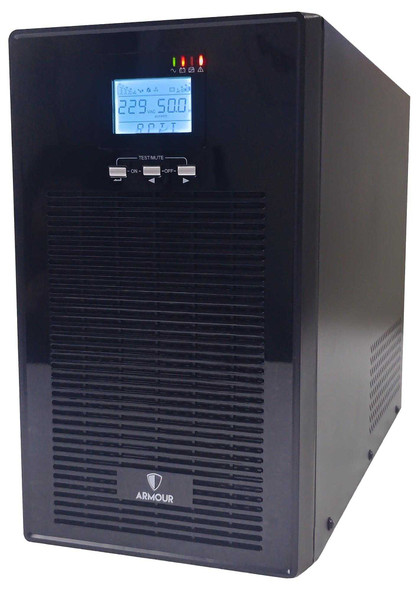

VIDA Armour 3000VA UPS 2400W Battery Backup – LCD, Pure Sine Wave & AVR
VIDA


APC Back-UPS BE500G2-UK 500VA 300W UPS – 8 UK Outlets
APC